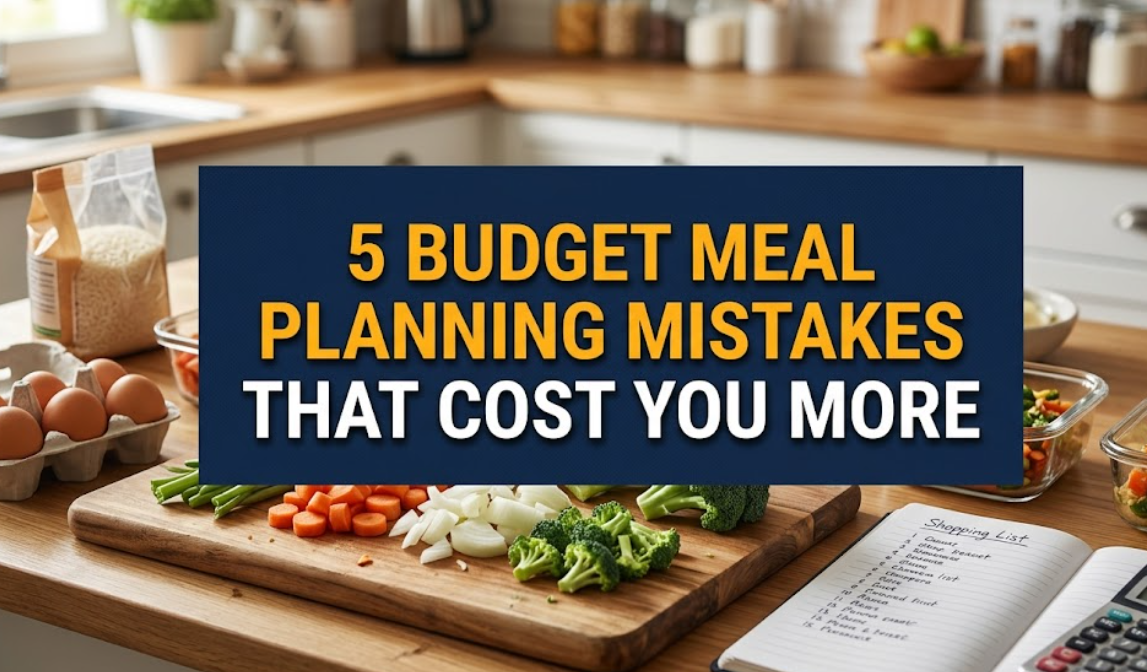
If you’ve ever tried to save money on groceries, you probably discovered something frustrating: even when you plan meals, the savings don’t always show up. In fact, many people unknowingly spend more while “trying” to be budget-conscious. The problem isn’t the idea of meal planning itself—it’s the way it’s done.
Budget meal planning is less about restriction and more about strategy. A few small mistakes can quietly drain your wallet week after week. This article explores five of the most common budget meal planning mistakes, explains why they happen, and offers practical ways to fix them. Along the way, you’ll find tables, breakdowns, and simple charts to make the ideas easier to apply in real life.
mistake 1: planning meals without checking what you already have
One of the biggest and most overlooked mistakes is planning meals from scratch without taking inventory of your kitchen. It sounds harmless, but it leads to duplicate purchases, forgotten ingredients, and unnecessary spending.
why this mistake happens
People often jump straight into meal planning with recipes they want to try. They write a grocery list based on those recipes, assuming they need everything. In reality, many of those items may already be sitting in the pantry, fridge, or freezer.
hidden costs of ignoring your inventory
- buying items you already own
- letting food expire because it gets buried
- wasting money on duplicates
- cluttered storage leading to more confusion
example of unnecessary spending
| item | already at home | bought again | cost wasted |
|---|---|---|---|
| rice (1 kg) | yes | yes | $2.50 |
| canned beans | yes | yes | $1.20 |
| frozen chicken | yes | yes | $5.00 |
| total wasted | $8.70 |
That’s nearly $9 wasted in one trip—and it adds up quickly over a month.
how to fix it
Before planning meals, do a quick inventory check. This doesn’t need to be complicated. A simple checklist works:
- open your fridge and note perishable items
- check pantry staples like rice, pasta, lentils
- look at your freezer for proteins or leftovers
- write down items that need to be used soon
simple inventory-first planning flow
| step | action |
|---|---|
| 1 | check fridge and freezer |
| 2 | list items nearing expiration |
| 3 | build meals around those items |
| 4 | fill gaps with minimal shopping |
By starting with what you already have, you turn your kitchen into a resource instead of ignoring it.
mistake 2: buying in bulk without a plan
Buying in bulk is often praised as a money-saving strategy. While it can be effective, it can also backfire badly if done without a clear plan.
why this mistake happens
Bulk deals create a sense of urgency. Discounts make it feel like you’re saving money, even if you don’t actually need the quantity.
hidden costs of bulk buying
- food spoils before you use it
- you tie up money in unused inventory
- storage becomes an issue
- you get bored of repetitive meals and waste food
example: bulk purchase gone wrong
| product | quantity bought | used | wasted | cost | wasted value |
|---|---|---|---|---|---|
| fresh spinach | 1 kg | 400g | 600g | $4 | $2.40 |
| yogurt packs | 12 | 8 | 4 | $6 | $2.00 |
| bread loaves | 3 | 2 | 1 | $3 | $1.00 |
| total wasted | $5.40 |
what makes bulk buying effective
Bulk buying only works when:
- the item has a long shelf life
- you already use it regularly
- you have a storage plan
- you divide portions properly
smart bulk buying guide
| category | good for bulk | not ideal for bulk |
|---|---|---|
| dry goods | yes | no issue |
| frozen foods | yes | if space limited |
| fresh produce | limited | high risk |
| dairy | limited | high spoilage |
how to fix it
Before buying in bulk, ask yourself:
- will I realistically use all of this?
- do I have storage space?
- can I freeze or preserve it?
- do I have meals planned around it?
If the answer to any of these is “no,” skip the bulk deal.
mistake 3: not planning for leftovers
Leftovers are one of the most powerful tools in budget meal planning, yet many people ignore them or treat them as an afterthought.
why this mistake happens
Some people don’t like eating the same meal twice. Others forget leftovers exist. In many cases, leftovers simply get pushed to the back of the fridge and forgotten.
hidden costs of ignoring leftovers
- cooked food gets wasted
- you cook more meals than necessary
- grocery bills increase
- time is wasted cooking extra meals
weekly leftover waste example
| meal cooked | servings made | servings eaten | servings wasted | cost wasted |
|---|---|---|---|---|
| chicken curry | 4 | 2 | 2 | $4.00 |
| pasta | 5 | 3 | 2 | $3.50 |
| stir fry | 3 | 2 | 1 | $2.00 |
| total waste | $9.50 |
how to turn leftovers into savings
Leftovers should be part of your plan, not an accident.
leftover planning strategy
| day | meal idea |
|---|---|
| monday | cook large batch of chicken |
| tuesday | use leftover chicken in wraps |
| wednesday | add chicken to salad or rice |
| thursday | finish remaining portions |
creative leftover transformations
- roasted vegetables → omelet filling
- rice → fried rice
- chicken → sandwiches or wraps
- lentils → soup base
how to fix it
Plan meals with built-in leftovers:
- cook slightly larger portions intentionally
- assign leftover meals specific days
- store food in visible containers
- label leftovers with dates
This approach reduces both food waste and cooking time.
mistake 4: choosing recipes that require too many unique ingredients
Trying new recipes can be fun, but constantly choosing meals with unique or rare ingredients can quickly inflate your grocery bill.
why this mistake happens
Online recipes often include long ingredient lists. Many of these items are used only once and then forgotten.
hidden costs
- buying ingredients you rarely use
- small quantities costing more per use
- ingredients expiring before reuse
- cluttered pantry
example: high-cost recipe planning
| recipe | unique ingredients | used again? | cost impact |
|---|---|---|---|
| thai curry | fish sauce, paste | no | high |
| special salad | exotic dressing | no | medium |
| baked dish | rare spice mix | no | high |
cost comparison chart
| planning style | weekly cost |
|---|---|
| simple shared items | $45 |
| unique ingredient plan | $72 |
difference: $27 per week
how to fix it
Focus on overlapping ingredients.
ingredient overlap strategy
| ingredient | used in meal 1 | used in meal 2 | used in meal 3 |
|---|---|---|---|
| chicken | curry | sandwich | salad |
| rice | bowl | stir fry | side dish |
| onions | curry | soup | stir fry |
benefits
- less waste
- lower costs
- simpler cooking
- faster meal prep
stick to a “core ingredient list” each week and build meals around it.
mistake 5: shopping without a strict list (or ignoring it)
Walking into a grocery store without a clear list—or ignoring it—is one of the fastest ways to overspend.
why this mistake happens
Stores are designed to encourage impulse buying. Promotions, displays, and discounts tempt you to buy things you didn’t plan for.
hidden costs
- impulse purchases
- buying snacks or extras
- exceeding your budget
- forgetting essential items
example of impulse spending
| planned budget | actual spending | difference |
|---|---|---|
| $50 | $68 | +$18 |
where the extra money goes
| category | unplanned cost |
|---|---|
| snacks | $6 |
| drinks | $5 |
| random deals | $7 |
how to fix it
Create a strict, categorized shopping list.
sample shopping list structure
| category | items |
|---|---|
| produce | onions, carrots |
| protein | chicken, eggs |
| grains | rice, pasta |
| dairy | milk, yogurt |
rules for sticking to your list
- eat before shopping (reduces impulse buys)
- avoid browsing unnecessary aisles
- use cash or a fixed budget
- track spending while shopping
simple spending control chart
| method | effectiveness |
|---|---|
| no list | low |
| loose list | medium |
| strict list | high |
| strict + budget cap | very high |
final thoughts
Budget meal planning isn’t just about choosing cheap meals. It’s about avoiding the small, repeated mistakes that quietly increase your spending. Each of the five mistakes discussed—ignoring inventory, careless bulk buying, neglecting leftovers, overcomplicated recipes, and unplanned shopping—can cost you far more than you realize.
When you fix these habits, something interesting happens: you don’t feel restricted. Instead, you gain more control over your food, your time, and your budget.
The goal isn’t perfection. It’s awareness. Even correcting one or two of these mistakes can lead to noticeable savings within a few weeks.
frequently asked questions
- how much money can I save by fixing these mistakes?
Most people can save between 15% to 30% on their grocery bills by avoiding these common mistakes. The exact amount depends on how often the mistakes occur. - is meal planning time-consuming?
Initially, it can take about 30–60 minutes per week. However, once you develop a system, it becomes much faster and even saves time during the week. - should I avoid bulk buying completely?
No, bulk buying can be very effective if done correctly. Focus on non-perishable items or foods you regularly use and can store properly. - what’s the easiest mistake to fix first?
Checking your inventory before planning meals is the simplest and most effective starting point. It requires minimal effort and delivers immediate savings. - how do I reduce food waste at home?
Plan meals around existing ingredients, store food properly, and schedule leftover days. Keeping food visible and organized also helps. - can meal planning work for very tight budgets?
Yes, meal planning is especially helpful for tight budgets. It allows you to prioritize essential items, reduce waste, and stretch ingredients across multiple meals.
By approaching meal planning with intention rather than habit, you transform it from a routine task into a powerful financial tool.