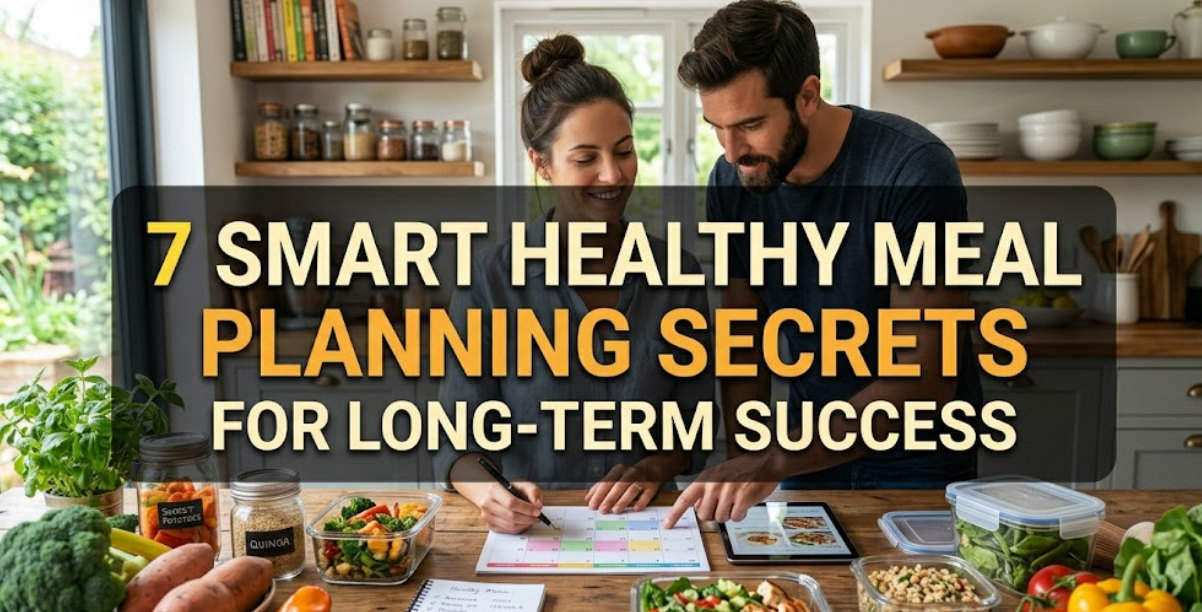
If you’ve ever tried to eat healthier for more than a week, you already know the truth: motivation fades, life gets busy, and good intentions quietly collapse under the weight of convenience. The real challenge isn’t knowing what healthy eating looks like—it’s sustaining it. That’s where smart meal planning comes in. Not the rigid, joyless kind, but a flexible, realistic system that adapts to your lifestyle.
This article explores seven practical, experience-tested meal planning secrets designed not just to help you start, but to keep going for the long haul. Along the way, you’ll find tables, frameworks, and simple charts that make the process easier to visualize and apply.
- Build a Repeatable Weekly Framework (Not a Perfect Plan)
The biggest mistake people make is trying to reinvent their meals every single week. That’s exhausting. Instead, build a weekly structure you can repeat, with room for variation.
Think of your week as a template rather than a script:
| Day | Meal Style Theme | Example Meal Type |
|---|---|---|
| Monday | Light & Fresh | Grilled chicken + salad |
| Tuesday | Protein Focus | Lentil curry + brown rice |
| Wednesday | Quick & Easy | Stir-fried vegetables + tofu |
| Thursday | Comfort Healthy | Baked fish + roasted potatoes |
| Friday | Flexible / Treat | Homemade pizza (healthy base) |
| Saturday | Batch Cooking | Meal prep for next 2–3 days |
| Sunday | Leftovers / Reset | Mix of remaining meals |
This approach reduces decision fatigue dramatically. You don’t wake up wondering what to eat—you already have a direction.
Why it works long-term:
- Cuts planning time in half
- Reduces grocery waste
- Builds habits automatically
- Think in Ingredients, Not Just Meals
Instead of planning 21 separate meals per week, focus on versatile ingredients that can be reused in multiple ways.
For example:
| Ingredient | Use 1 | Use 2 | Use 3 |
|---|---|---|---|
| Grilled Chicken | Salad topping | Wrap filling | Stir-fry protein |
| Boiled Chickpeas | Hummus | Curry base | Salad addition |
| Brown Rice | Side dish | Fried rice | Grain bowl base |
| Roasted Veggies | Dinner side | Sandwich filling | Pasta mix-in |
This “ingredient-first” strategy saves time, money, and effort.
Mini workflow:
- Cook once
- Use multiple times
- Combine differently
It’s less about cooking more and more about using smarter.
- Use the 3–3–2 Planning Rule
A simple system that works incredibly well for busy people:
- 3 breakfasts
- 3 lunches
- 2 dinners
Repeat them throughout the week.
Example:
| Meal Type | Options |
|---|---|
| Breakfast | Oatmeal, eggs & toast, smoothie |
| Lunch | Chicken salad, lentil bowl, wrap |
| Dinner | Stir-fry, baked fish |
Why only 2 dinners? Because dinners take the most effort—keeping them limited makes consistency easier.
Visual breakdown:
Weekly Meal Simplicity Chart
| Complexity Level | Number of Options | Sustainability Score |
|---|---|---|
| High Variety | 15–20 meals | Low |
| Moderate | 8–10 meals | Medium |
| Simplified | 5–8 meals | High |
Less choice = more consistency.
- Batch Cooking Without Burnout
Batch cooking is powerful—but only if you don’t overdo it.
The key is “partial batching,” not full-week cooking marathons.
Instead of cooking everything, prep components:
| Component | Prep Method | Storage Life |
|---|---|---|
| Proteins | Grill or bake | 3–4 days |
| Grains | Cook in bulk | 4–5 days |
| Vegetables | Chop / roast | 3–4 days |
| Sauces | Make fresh | 5–7 days |
Then mix and match daily.
Example combinations:
- Rice + chicken + veggies + sauce
- Wrap + chickpeas + greens
- Bowl + tofu + roasted vegetables
This keeps meals fresh without daily cooking stress.
- Plan for Real Life, Not Ideal Days
A perfect plan that ignores your real schedule will fail.
Instead, map your meals to your energy levels and time availability.
Daily Energy Mapping Table:
| Time of Day | Energy Level | Best Meal Type |
|---|---|---|
| Morning | Medium | Simple, quick meals |
| Afternoon | Low | Pre-prepared lunches |
| Evening | Variable | Flexible dinners |
Also consider “low-effort backup meals”:
| Situation | Backup Meal Idea |
|---|---|
| Too tired to cook | Pre-cooked leftovers |
| No groceries | Eggs + toast |
| Busy schedule | Smoothie or protein bowl |
Planning for imperfect days is what makes the system sustainable.
- Balance Nutrition Without Overthinking
Healthy eating doesn’t require complex calculations. Use a simple visual balance approach:
The Balanced Plate Model:
| Component | Portion Size | Examples |
|---|---|---|
| Protein | 25% of plate | Chicken, beans, tofu |
| Carbohydrates | 25% of plate | Rice, potatoes, quinoa |
| Vegetables | 50% of plate | Leafy greens, broccoli |
Weekly Nutrition Diversity Chart:
| Food Group | Target Frequency (per week) |
|---|---|
| Vegetables | Daily |
| Fruits | 5–7 times |
| Protein | Daily |
| Whole grains | 4–6 times |
| Healthy fats | Daily (small amounts) |
Instead of perfection, aim for consistency across the week.
- Review, Adjust, Repeat
Meal planning isn’t a one-time setup—it’s a feedback loop.
At the end of each week, ask:
- What meals did I actually eat?
- What got wasted?
- What felt easy?
- What felt stressful?
Weekly Review Table:
| Question | Example Answer | Action |
|---|---|---|
| What worked? | Batch cooking rice | Keep doing it |
| What didn’t? | Complicated dinners | Simplify meals |
| What was skipped? | Smoothies | Replace or remove |
| What was loved? | Stir-fry bowls | Repeat next week |
Small adjustments each week lead to long-term success.
Putting It All Together: A Sample Smart Meal Plan
Here’s how everything looks when combined:
| Day | Breakfast | Lunch | Dinner |
|---|---|---|---|
| Monday | Oatmeal | Chicken salad | Stir-fry |
| Tuesday | Smoothie | Lentil bowl | Baked fish |
| Wednesday | Eggs & toast | Wrap | Stir-fry |
| Thursday | Oatmeal | Chicken salad | Baked fish |
| Friday | Smoothie | Lentil bowl | Flexible meal |
| Saturday | Eggs & toast | Leftovers | Batch cooking |
| Sunday | Flexible | Leftovers | Light dinner |
Notice the repetition—it’s intentional.
Long-Term Success Formula
You don’t need perfection. You need a system that:
- Reduces decisions
- Fits your schedule
- Allows flexibility
- Encourages repetition
- Evolves over time
Success equation:
Consistency + Simplicity + Flexibility = Sustainable Healthy Eating
FAQs
- How long should meal planning take each week?
Ideally, no more than 30–60 minutes. With a repeatable framework, it often drops to 20 minutes or less over time.
- What if I get bored eating the same meals?
Change flavors, not structure. Use different spices, sauces, or cooking methods while keeping the same base ingredients.
- Is meal prepping necessary for success?
Not strictly, but some level of preparation—like chopping vegetables or cooking grains—makes healthy choices much easier.
- How do I stick to meal planning during busy weeks?
Rely on backup meals and simplify your plan. Even a basic structure is better than none.
- Can I include cheat meals?
Yes. Flexibility is key for long-term success. Plan them intentionally rather than impulsively.
- What’s the biggest mistake beginners make?
Overcomplicating everything. Too many recipes, too much variety, and unrealistic expectations often lead to burnout.
Healthy meal planning isn’t about rigid control—it’s about creating a system that supports your life instead of competing with it. Once you shift from perfection to practicality, everything changes.