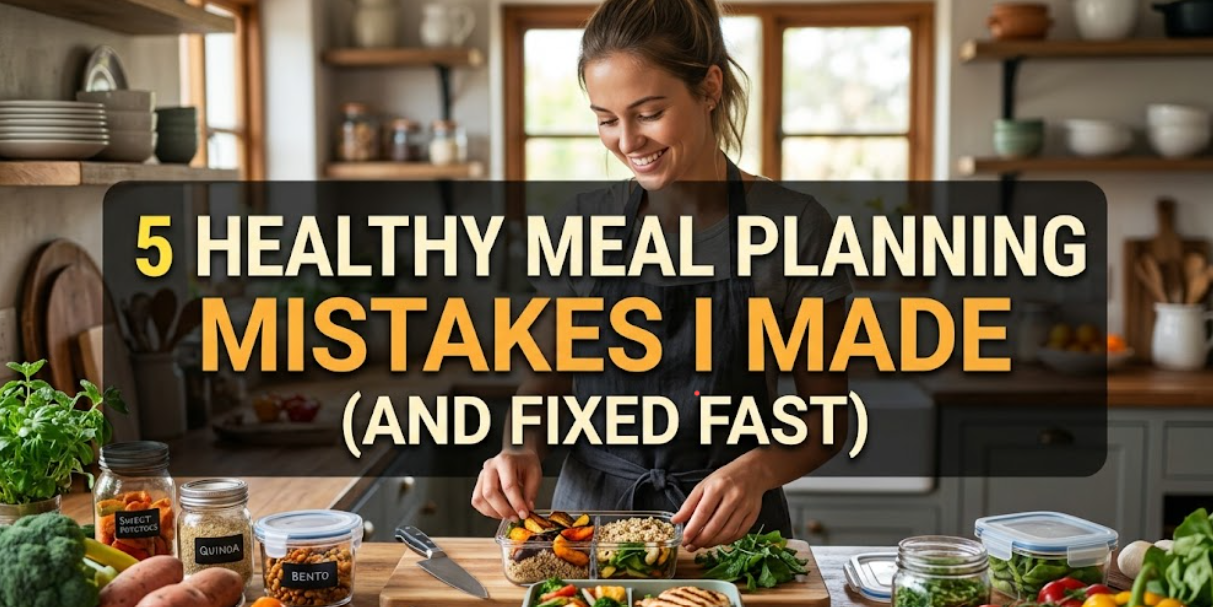
I used to believe that “healthy meal planning” meant buying a lot of vegetables, cooking on Sunday, and hoping everything magically worked out during the week. It didn’t. By Wednesday, I’d be tired, bored, and ordering takeout again. The truth is, meal planning isn’t just about food—it’s about systems, habits, and realistic expectations.
Over time, I made several mistakes that quietly sabotaged my efforts. The good news? Each mistake came with a fix that made things not only easier, but surprisingly enjoyable. If you’ve ever felt stuck, overwhelmed, or just inconsistent with healthy eating, you’ll probably recognize some of these.
Below are five mistakes I made, what went wrong, and how I fixed them quickly—with practical strategies, examples, and useful tables to help you avoid the same traps.
mistake 1: planning meals that were too complicated
When I first started meal planning, I aimed high—almost too high. I picked recipes that looked amazing online: multiple sauces, long ingredient lists, and cooking methods I rarely used. It felt exciting at first, but quickly turned into a burden.
By the middle of the week, I’d skip cooking entirely because I didn’t have the time or energy to follow a complicated recipe. Instead of eating healthier, I ended up eating less consistently.
why this failed
- Time underestimated: I didn’t factor in prep, cleanup, and real-life interruptions
- Mental fatigue: Decision-making and execution became overwhelming
- Ingredient waste: Half-used items went bad
how I fixed it
I switched to “modular meal planning.” Instead of planning full recipes, I planned components: proteins, grains, vegetables, and sauces. This allowed me to mix and match meals without stress.
example weekly modular plan
| Component Type | Options Chosen for the Week |
|---|---|
| Proteins | Grilled chicken, boiled eggs, lentils |
| Grains | Brown rice, whole wheat wraps |
| Vegetables | Roasted carrots, sautéed spinach, cucumbers |
| Sauces | Yogurt dressing, tahini sauce |
sample mix-and-match meals
| Meal Idea | Combination |
|---|---|
| Wrap | Chicken + spinach + yogurt sauce |
| Bowl | Rice + lentils + roasted carrots |
| Snack | Boiled eggs + cucumbers |
This reduced cooking time, minimized stress, and kept meals flexible.
mistake 2: not planning for cravings
I used to plan “perfect” healthy meals—clean, balanced, and often a bit bland. But I ignored one crucial factor: cravings. By evening, I’d want something salty, crunchy, or sweet, and my plan didn’t include any of that.
Eventually, I’d give in and overeat less healthy options.
why this failed
- Unrealistic expectations
- Lack of satisfaction from meals
- All-or-nothing mindset
how I fixed it
I started building cravings into my meal plan instead of fighting them.
craving-aware planning table
| Craving Type | Healthy Alternative |
|---|---|
| Sweet | Dark chocolate, fruit with yogurt |
| Salty | Roasted chickpeas, popcorn |
| Crunchy | Carrot sticks, nuts |
| Comfort | Homemade pasta with controlled portions |
weekly craving inclusion example
| Day | Planned Treat |
|---|---|
| Monday | 2 squares dark chocolate |
| Wednesday | Homemade popcorn |
| Friday | Small dessert |
This approach made my plan sustainable. I stopped feeling deprived, which reduced binge eating.
mistake 3: ignoring portion control
At one point, I thought that as long as food was “healthy,” I could eat as much as I wanted. That mindset backfired.
Even nutritious foods can lead to overeating if portions aren’t considered. I often ended meals feeling overly full, which affected my energy levels.
why this failed
- Healthy ≠ unlimited
- Calorie awareness was missing
- Hunger cues became confusing
how I fixed it
I started using simple portion guidelines instead of strict calorie counting.
basic portion guide
| Food Group | Portion Size |
|---|---|
| Protein | Palm-sized |
| Carbs | Cupped hand |
| Fats | Thumb-sized |
| Vegetables | Two handfuls |
sample balanced plate
| Section | Food Example |
|---|---|
| Protein | Grilled chicken |
| Carbs | Brown rice |
| Veggies | Broccoli + carrots |
| Fats | Olive oil drizzle |
This visual method helped me stay balanced without obsessing over numbers.
mistake 4: meal prepping too much at once
At first, I tried to prep everything for the entire week in one day. It sounded efficient, but it wasn’t practical.
By day four or five, food didn’t taste fresh. Some meals went uneaten, and I felt frustrated.
why this failed
- Food quality declined
- Monotony set in
- Time investment was exhausting
how I fixed it
I shifted to “split prepping”—preparing food twice a week instead of once.
split prep schedule
| Day | Prep Focus |
|---|---|
| Sunday | Cook proteins, grains |
| Wednesday | Refresh vegetables, sauces |
benefits of this approach
- Fresher meals
- Less burnout
- Better taste and variety
I also started freezing certain items like cooked rice or soups to extend their life.
food storage guideline
| Food Type | Fridge Life | Freezer Life |
|---|---|---|
| Cooked chicken | 3–4 days | 2–3 months |
| Cooked rice | 3–5 days | 1 month |
| Vegetables | 3–5 days | varies |
mistake 5: not having a backup plan
Life doesn’t always follow your plan. There were days I came home late, felt exhausted, or simply didn’t want to cook what I had prepared.
Without a backup plan, I defaulted to takeout.
why this failed
- Lack of flexibility
- No quick options
- Decision fatigue
how I fixed it
I created a “backup meal system”—fast, healthy meals requiring minimal effort.
backup meal ideas
| Meal | Prep Time |
|---|---|
| Scrambled eggs + toast | 10 minutes |
| Yogurt + granola + fruit | 5 minutes |
| Canned tuna wrap | 7 minutes |
| Frozen veggie stir-fry | 15 minutes |
backup pantry essentials
| Item | Use |
|---|---|
| Canned beans | Quick protein |
| Frozen vegetables | Instant sides |
| Eggs | Fast meals |
| Whole grain bread | Base for meals |
This safety net kept me consistent even on tough days.
weekly meal planning example (fixed system in action)
Here’s how my improved system looks in practice:
| Day | Meal Plan | Notes |
|---|---|---|
| Monday | Chicken bowl | Fresh prep |
| Tuesday | Lentil wrap | Quick assembly |
| Wednesday | Stir-fry (fresh prep) | Midweek refresh |
| Thursday | Rice + veggies | Light meal |
| Friday | Flexible + treat | Craving included |
| Saturday | Leftovers or backup | Low effort |
| Sunday | Prep day | Reset |
key lessons learned
- Simplicity beats perfection
- Flexibility matters more than strict rules
- Planning for real life is essential
- Small adjustments create big results
- Consistency is built through ease, not pressure
faqs
- how long should meal planning take each week?
Ideally, 1–2 hours total, including planning and prep. Splitting it into two shorter sessions can make it more manageable. - is it okay to repeat meals during the week?
Yes, repeating meals saves time and reduces decision fatigue. You can vary sauces or sides to keep things interesting. - how do I avoid getting bored with healthy meals?
Use different spices, sauces, and cooking methods. Even small changes can make the same ingredients feel new. - do I need to count calories for meal planning?
Not necessarily. Simple portion control and balanced meals are often enough for most people. - what’s the best way to stay consistent?
Make your system easy and flexible. Include foods you enjoy and allow room for changes. - can meal planning work for busy schedules?
Absolutely. In fact, it works best for busy people when done simply. Focus on quick meals and backup options.
final thoughts
Healthy meal planning doesn’t require perfection, discipline, or hours in the kitchen. It requires awareness—of your habits, your preferences, and your daily routine.
The mistakes I made weren’t failures; they were signals pointing me toward a better system. Once I simplified my approach, planned realistically, and allowed flexibility, everything changed.
If you’re struggling, don’t try to overhaul everything overnight. Start by fixing just one mistake. That small shift can lead to a system that finally works—not just for a week, but for the long run.