There’s a quiet frustration many people share but rarely talk about: spending money on groceries with the best intentions, only to throw away wilted vegetables, unused sauces, or leftovers that never quite made it back onto the plate. Food waste and impulsive buying habits quietly drain budgets, especially in households trying to stretch every rupee or dollar.
Meal prep, when done right, is less about cooking in bulk and more about thinking ahead. It’s about buying smarter, using what you already have, and turning simple ingredients into multiple meals without feeling repetitive. The real goal isn’t just saving time—it’s keeping more money in your pocket while still eating well.
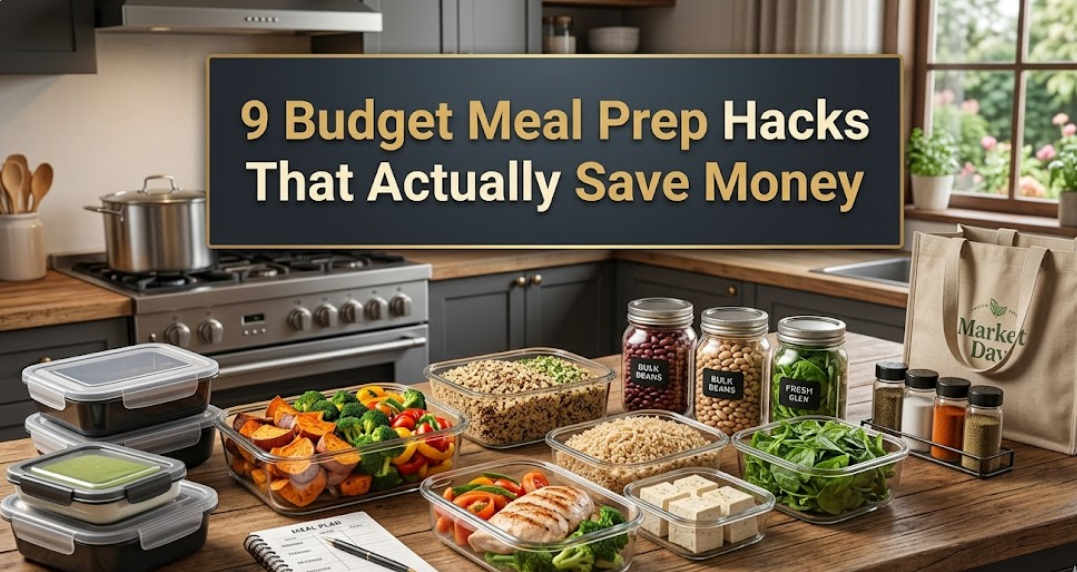
Below are nine budget meal prep hacks that don’t rely on extreme couponing or complicated systems. These are practical, repeatable methods that actually reduce food costs over time.
understanding where food money really goes
Before diving into hacks, it helps to understand where most food budgets leak. It’s rarely just “expensive groceries.” More often, it’s a combination of small habits.
Here’s a simple breakdown:
| Expense Type | Common Issue | Monthly Impact |
|---|---|---|
| Impulse grocery buys | Unplanned snacks, extras | Medium |
| Food waste | Spoiled produce, leftovers | High |
| Eating out | Convenience meals | Very High |
| Overbuying variety | Too many ingredients | Medium |
| Poor storage | Food going bad early | Medium |
If you fix even two or three of these areas, the savings can be significant.
hack 1: plan meals around what’s already in your kitchen
One of the easiest ways to save money is to treat your pantry like a starting point instead of an afterthought. Before making a grocery list, check what you already have—rice, lentils, canned beans, spices, frozen vegetables.
Instead of buying new ingredients for every recipe, build meals around these staples.
For example:
- Leftover rice → fried rice or rice bowls
- Canned chickpeas → curry or salad
- Old vegetables → soup or stir-fry
This approach reduces duplicate purchases and prevents waste.
pantry-first meal ideas
| Ingredient | Meal Option 1 | Meal Option 2 |
|---|---|---|
| Rice | Stir-fry | Burrito bowl |
| Lentils | Curry | Soup |
| Eggs | Omelet | Fried rice |
| Potatoes | Roasted | Mash |
hack 2: choose ingredients that overlap across meals
Buying unique ingredients for every dish is one of the fastest ways to overspend. Instead, pick a small group of versatile ingredients and use them in multiple meals.
For instance, if you buy:
- Chicken
- Bell peppers
- Rice
- Yogurt
You can create:
- Chicken rice bowls
- Fajitas
- Stir-fry
- Wraps
The trick is repetition with variation. You’re not eating the same meal—you’re reusing ingredients in different ways.
example of ingredient overlap
| Ingredient | Meal 1 | Meal 2 | Meal 3 |
|---|---|---|---|
| Chicken | Curry | Stir-fry | Wrap |
| Bell peppers | Fajitas | Omelet | Rice bowl |
| Yogurt | Sauce | Breakfast | Marinade |
hack 3: cook once, eat twice (or three times)
Cooking in batches is the foundation of meal prep, but the real savings come when you intentionally design meals that can be reused.
For example:
- Roast a large tray of chicken → use in salads, wraps, and pasta
- Cook a pot of lentils → turn into curry one day, soup the next
This reduces energy use (gas/electricity) and saves time, which indirectly saves money by reducing the temptation to order food.
batch cooking efficiency
| Dish | Initial Use | Second Use | Third Use |
|---|---|---|---|
| Grilled chicken | Main meal | Sandwich | Salad |
| Rice | Side | Fried rice | Stuffed peppers |
| Beans | Curry | Tacos | Soup |
hack 4: buy in bulk—but only for the right items
Bulk buying can save money, but only if you’re buying things you’ll actually use before they expire.
Good bulk items:
- Rice
- Flour
- Lentils
- Oats
- Frozen vegetables
Risky bulk items:
- Fresh produce (unless you have a plan)
- Dairy products
- Specialty sauces
The idea is to stock up on long-lasting staples, not everything in sight.
bulk buying savings example
| Item | Small Pack Price | Bulk Price | Savings |
|---|---|---|---|
| Rice (1 kg vs 5 kg) | Higher per kg | Lower per kg | High |
| Oats | Medium | Lower | Medium |
| Fresh spinach | Low | Often wasted | Low |
hack 5: freeze strategically, not randomly
Freezing food is one of the most powerful budget tools, but many people use it incorrectly. Instead of freezing leftovers you might forget, freeze components you know you’ll use.
Smart freezing ideas:
- Cooked rice in portions
- Marinated chicken ready to cook
- Chopped vegetables
- Bread slices
Label everything with dates to avoid “mystery freezer items.”
freezer planning chart
| Food | Best Use | Storage Time |
|---|---|---|
| Cooked rice | Quick meals | 1–2 months |
| Chicken (raw/marinated) | Future meals | 2–3 months |
| Bread | Toast/sandwiches | 1–2 months |
| Vegetables | Cooking | 2–3 months |
hack 6: prioritize cheap, high-nutrition foods
You don’t need expensive ingredients to eat well. Some of the most affordable foods are also the most nutritious.
Budget-friendly staples:
- Lentils
- Eggs
- Potatoes
- Seasonal vegetables
- Whole grains
These foods stretch meals and keep you full longer, reducing the need for extra snacks.
nutrition vs cost comparison
| Food | Cost Level | Nutrition Value | Satiety |
|---|---|---|---|
| Lentils | Low | High | High |
| Eggs | Low | High | Medium |
| Chicken | Medium | High | High |
| Processed snacks | Medium | Low | Low |
hack 7: use simple seasoning to transform meals
Instead of buying multiple sauces, rely on a few core spices and condiments to create different flavors.
Basic flavor toolkit:
- Garlic
- Salt & pepper
- Chili powder
- Soy sauce
- Lemon juice
With these, the same ingredients can taste completely different across meals.
For example:
- Rice + chicken + soy sauce → Asian-style
- Rice + chicken + chili + lemon → spicy bowl
- Rice + chicken + yogurt → creamy dish
hack 8: prep ingredients, not just full meals
Many people think meal prep means fully cooked meals, but prepping ingredients can be just as effective—and more flexible.
Try:
- Washing and chopping vegetables
- Cooking grains in advance
- Marinating proteins
This allows you to cook fresh meals quickly without starting from scratch.
time-saving comparison
| Task | Without Prep | With Prep |
|---|---|---|
| Cooking dinner | 60 min | 20–30 min |
| Cleaning | More | Less |
| Effort | High | Moderate |
hack 9: track your actual savings
If you don’t track your spending, it’s hard to see the impact of meal prep. Keep a simple record of grocery costs and compare it to previous months.
You can also estimate savings from avoided takeout.
monthly comparison example
| Category | Before Meal Prep | After Meal Prep |
|---|---|---|
| Groceries | Moderate | Lower |
| Takeout | High | Low |
| Food waste | High | Low |
| Total | High | Reduced |
Even a 20–30% reduction in food spending can make a noticeable difference over time.
realistic weekly budget meal prep plan
Here’s a simple plan using the hacks above:
Shopping list:
- Rice
- Lentils
- Eggs
- Chicken
- Seasonal vegetables
- Yogurt
Meals:
- Lentil curry with rice
- Chicken stir-fry
- Egg fried rice
- Vegetable omelet
- Yogurt bowls
Estimated cost breakdown
| Item | Cost Estimate |
|---|---|
| Rice | Low |
| Lentils | Low |
| Eggs | Low |
| Chicken | Medium |
| Vegetables | Low |
| Total weekly cost | Budget-friendly |
This setup can easily cover 10–12 meals at a fraction of the cost of eating out.
common budget meal prep mistakes
Buying too much variety at once often leads to waste. Stick to fewer ingredients used in multiple ways.
Another mistake is ignoring storage. Food that spoils early cancels out any savings.
Lastly, overcomplicating recipes can lead to burnout. Simple meals are easier to repeat consistently.
how consistency creates long-term savings
Meal prep isn’t a one-time fix. The real savings come from repeating the process week after week. Over time, you develop a rhythm—knowing what to buy, how much to cook, and what works best for your routine.
Even small weekly savings add up. Cutting just a few unnecessary purchases can result in significant yearly savings.
faq section
- how much money can meal prep actually save?
It depends on your current habits, but many people save 20–50% on food costs by reducing takeout and minimizing waste. - is meal prep cheaper than eating out every day?
Yes, significantly. Even simple home-cooked meals cost far less than restaurant or takeaway options. - what are the cheapest foods for meal prep?
Lentils, rice, eggs, potatoes, and seasonal vegetables are among the most affordable and versatile options. - how do i avoid getting bored with meal prep?
Use different spices, sauces, and cooking methods to create variety from the same base ingredients. - can meal prep work for small households?
Absolutely. You can cook smaller batches or freeze portions to avoid waste. - do i need special containers for meal prep?
Not necessarily. Any airtight container works, though glass containers are more durable and microwave-safe.
closing thoughts
Saving money on food isn’t about extreme restrictions or giving up meals you enjoy. It’s about being intentional—planning ahead, using what you have, and making smarter choices at the store and in the kitchen.
These nine budget meal prep hacks are simple, but their impact builds over time. Once they become habits, you’ll notice not just financial savings, but also less stress, less waste, and more control over your daily routine.