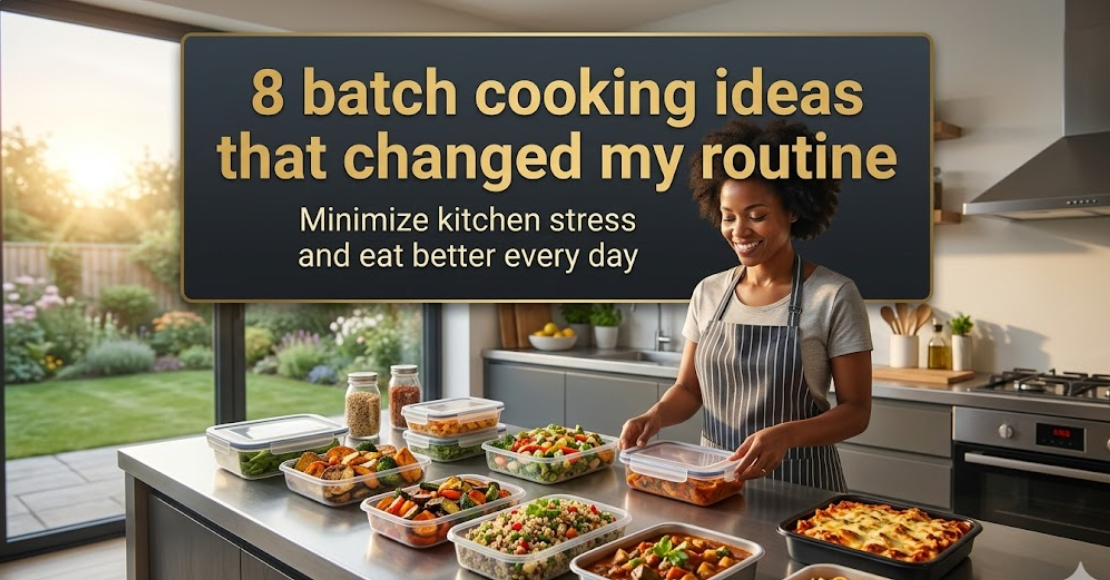
There was a time when cooking felt like a daily obligation I could never quite get ahead of. Every evening brought the same question: what now? Some days I’d cook something elaborate and feel satisfied, but most days it was rushed, repetitive, or replaced by takeout. Batch cooking didn’t enter my life as a grand strategy—it came from necessity. A packed schedule, rising food costs, and a desire to eat better pushed me to experiment. What followed wasn’t a perfect system, but a set of small, practical ideas that gradually reshaped how I approached food during the week.
This isn’t a rigid plan or a one-size-fits-all method. These eight batch cooking ideas evolved through trial and error, and each one made a noticeable difference. Together, they turned cooking from a daily burden into something calmer, more predictable, and surprisingly flexible.
idea 1: cooking one “anchor meal” instead of multiple dishes
In the beginning, I made the mistake most people make: trying to cook too many different things at once. It felt productive, but it quickly became exhausting. The real shift happened when I focused on just one “anchor meal” per batch session.
An anchor meal is a large, versatile dish that can be repurposed throughout the week. Think of something like a big pot of chicken curry, a tray of roasted vegetables, or a slow-cooked lentil stew. Instead of juggling five recipes, I cooked one solid base and built meals around it.
Here’s how that simplified things:
| Aspect | Before Anchor Meal | After Anchor Meal |
|---|---|---|
| Number of dishes | 4–5 per session | 1–2 per session |
| Prep time | 2–3 hours | 60–90 minutes |
| Cleanup | Heavy | Minimal |
| Weekly flexibility | Low | High |
The anchor meal approach works because it reduces decisions. Once the base is ready, everything else becomes assembly rather than cooking.
idea 2: separating components instead of mixing everything
At first, I cooked complete meals and stored them as-is. This seemed efficient, but by midweek, everything tasted the same. The solution was simple: stop combining everything too early.
Instead of storing a finished dish, I began storing components separately—grains, proteins, vegetables, and sauces. This one change dramatically improved variety without increasing workload.
Example setup:
| Component | Batch Cooked Item | Storage Method |
|---|---|---|
| Protein | Grilled chicken strips | Airtight container |
| Carbohydrate | Cooked rice | Portion boxes |
| Vegetables | Roasted mixed vegetables | Tray or container |
| Sauce | Yogurt garlic sauce | Small jar |
With this setup, one base can turn into multiple meals:
- rice + chicken + sauce = bowl
- vegetables + chicken in wrap = quick lunch
- rice + vegetables + fried egg = vegetarian option
The same ingredients feel different when assembled differently.
idea 3: doubling recipes without doubling effort
One of the easiest wins in batch cooking is simply cooking more of what you’re already making. The effort difference between cooking for two servings and six servings is surprisingly small.
The trick is choosing recipes that scale well—stews, curries, pasta sauces, and baked dishes.
Time comparison:
| Task | Small Batch | Large Batch |
|---|---|---|
| Prep ingredients | 15 min | 20 min |
| Cooking time | 30 min | 35–40 min |
| Total servings | 2–3 | 6–8 |
You gain multiple meals for only a slight increase in time. Over a week, that adds up significantly.
idea 4: using the oven for passive cooking
The stovetop demands attention. The oven, on the other hand, works quietly in the background. Once I leaned into oven-based batch cooking, everything became less hectic.
Roasting trays of vegetables, baking chicken, or even cooking grains in the oven freed up time to prepare other items—or just step away for a moment.
Typical oven batch setup:
| Tray | Contents | Cooking Time |
|---|---|---|
| 1 | Potatoes + carrots | 40 min |
| 2 | Chicken thighs | 35 min |
| 3 | Bell peppers + zucchini | 25 min |
All three trays cook simultaneously, reducing total effort. It’s one of the most overlooked efficiency tricks.
idea 5: prepping “ready-to-cook” ingredients
Not everything has to be fully cooked in advance. Some of the biggest time savings came from prepping ingredients so they were ready to cook quickly.
For example:
- chopped onions stored in containers
- marinated chicken ready for the pan
- washed and cut vegetables
This approach sits between full batch cooking and daily cooking, offering flexibility without starting from scratch.
Prep vs cook comparison:
| Task Type | Time Required | Effort Level |
|---|---|---|
| Full cooking | 30–60 min | Medium |
| Ready-to-cook | 10–15 min | Low |
On busy days, even cutting 15 minutes off cooking feels like a major win.
idea 6: freezing strategically, not everything
Early on, I tried freezing everything. The result? A freezer full of forgotten meals. The smarter approach was selective freezing.
I started freezing only items that:
- reheat well (curries, soups, sauces)
- don’t lose texture easily
- are easy to portion
Freezer-friendly foods:
| Food Type | Freezer Quality | Notes |
|---|---|---|
| Lentil curry | Excellent | Keeps flavor well |
| Rice | Good | Reheat with moisture |
| Pasta | Moderate | Can soften over time |
| Salad | Poor | Avoid freezing |
By being selective, the freezer became a useful backup instead of a storage problem.
idea 7: building a repeatable weekly rhythm
Batch cooking became easier when I stopped improvising every week. A simple rhythm made everything more predictable.
Example weekly flow:
| Day | Task |
|---|---|
| Saturday | Grocery shopping |
| Sunday | Batch cooking (1–2 hours) |
| Wednesday | Light prep or top-up |
| Weekdays | Reheat and assemble meals |
This rhythm removed the mental load of planning. I didn’t have to decide when to cook—it was already part of the routine.
idea 8: allowing room for flexibility and imperfection
The biggest change wasn’t technical—it was mental. At first, I approached batch cooking like a strict system. Everything had to be perfectly portioned, labeled, and scheduled.
That didn’t last.
Real life is unpredictable. Some meals get skipped, others get repeated, and sometimes plans change entirely. Accepting that flexibility made the system sustainable.
Instead of aiming for perfection, I focused on progress:
- even one batch-cooked meal helped
- leftovers were still a success
- partial prep was better than none
This mindset shift made batch cooking feel supportive rather than restrictive.
a practical weekly meal assembly chart
To show how everything comes together, here’s a simple meal assembly plan using batch components:
| Day | Meal Idea | Components Used |
|---|---|---|
| Monday | Chicken rice bowl | Rice + chicken + vegetables |
| Tuesday | Wrap with roasted vegetables | Flatbread + vegetables |
| Wednesday | Lentil curry with rice | Lentils + rice |
| Thursday | Stir-fry noodles | Noodles + chicken + sauce |
| Friday | Mixed bowl with egg | Rice + vegetables + egg |
Notice how the same ingredients appear in different combinations. That’s the real strength of batch cooking.
cost and time efficiency breakdown
Batch cooking doesn’t just save time—it often reduces costs as well.
| Category | Without Batch Cooking | With Batch Cooking |
|---|---|---|
| Weekly groceries | Higher | Lower |
| Takeout spending | Frequent | Rare |
| Time spent cooking | Daily | 2–3 times weekly |
| Food waste | Moderate | Minimal |
Even small savings per meal add up over time.
simple batch cooking checklist
To make the process smoother, I rely on a basic checklist:
- choose 2–3 recipes for the week
- check pantry before shopping
- prep ingredients in batches
- cook largest items first
- cool food before storing
- label containers with dates
This checklist keeps things organized without overcomplicating the process.
frequently asked questions
- how do i start batch cooking if i’ve never done it before
Start small. Choose one recipe and cook enough for two or three days. Focus on learning the process rather than trying to prepare an entire week of meals at once. - how long does batch cooking usually take
Most sessions take between 60 and 120 minutes, depending on how many dishes you prepare. With practice, it becomes faster and more efficient. - can batch cooking work for different diets
Yes. The approach is flexible and can be adapted for vegetarian, high-protein, or other dietary needs. The key is choosing recipes that suit your preferences. - how do i avoid getting bored with the same food
Store components separately and combine them in different ways. Changing sauces, spices, or sides can make the same base ingredients feel new. - is batch cooking safe for food storage
Yes, as long as food is cooled properly, stored in airtight containers, and consumed within safe time limits (usually 3–5 days in the fridge). - do i need special equipment for batch cooking
No. Basic kitchen tools like pots, pans, and containers are enough. Over time, you may find certain tools helpful, but they’re not required to get started.
Batch cooking didn’t transform my routine overnight. It was a gradual shift built on small adjustments—cooking a little more, planning a little better, and letting go of the idea that every meal had to be freshly made from scratch. These eight ideas weren’t complicated, but together they created a system that saved time, reduced stress, and made everyday eating feel far more manageable.
If there’s one takeaway, it’s this: batch cooking doesn’t have to be perfect to be effective. Even partial effort pays off. And once you find your rhythm, it becomes less of a chore and more of a quiet advantage that carries you through the week.