
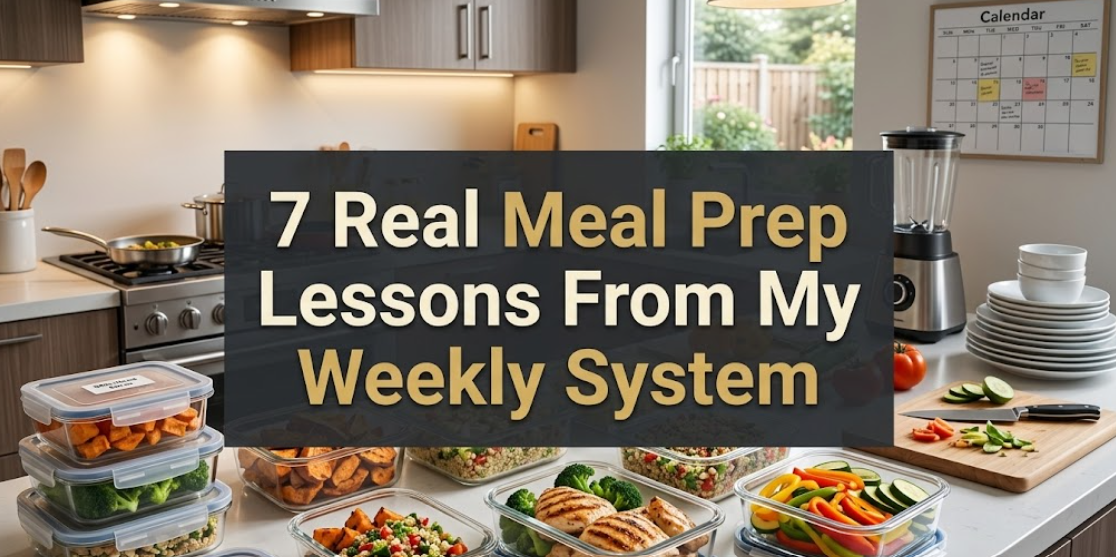
For a long time, I thought meal prep was something reserved for people with perfectly organized kitchens, endless motivation, and a level of discipline I didn’t have. I tried it in bursts—usually on a Sunday evening when I felt particularly determined—and then abandoned it halfway through the week when life got messy. Over time, though, something shifted. Instead of chasing a “perfect system,” I started building a realistic one. What follows are seven lessons that emerged from that weekly system—not theoretical advice, but things that held up when work ran late, plans changed, or I simply didn’t feel like cooking.
This isn’t about flawless execution. It’s about what actually works when you repeat it week after week.
lesson 1: the system matters more than the recipes
Early on, I spent too much time hunting for exciting recipes. I’d bookmark dozens, plan ambitious menus, and then feel overwhelmed before I even started cooking. Eventually, I realized that the problem wasn’t the food—it was the lack of a consistent system.
Now, my weekly meal prep follows a predictable structure. I don’t reinvent the process; I just plug different ingredients into it.
A simplified version of my system looks like this:
| Step | What I Do | Time Spent |
|---|---|---|
| Planning | Choose 2–3 main meals | 20 mins |
| Shopping | Buy only listed items | 45 mins |
| Prep | Chop, marinate, portion | 40 mins |
| Cooking | Batch cook staples | 60–80 mins |
| Storage | Portion and label | 20 mins |
Once the system became familiar, everything else got easier. Even on weeks when I felt unmotivated, I could fall back on the routine. The lesson here is simple: recipes change, but a reliable structure keeps things moving.
lesson 2: repetition is not boring—it’s efficient
At first, I resisted repeating meals. I thought variety was the key to staying committed. In reality, too much variety created friction. Every new recipe meant new ingredients, new steps, and more room for mistakes.
Now, I intentionally repeat meals—just not in a rigid way. I might cook the same base dish but tweak flavors slightly.
For example:
| Base Meal | Variation 1 | Variation 2 | Variation 3 |
|---|---|---|---|
| Chicken + Rice | Lemon garlic | Spicy chili | Soy ginger |
| Pasta | Tomato basil | Creamy mushroom | Garlic olive oil |
| Stir-fry | Teriyaki | Sweet chili | Peanut sauce |
This approach gives me familiarity without monotony. I don’t have to think from scratch, but I also don’t feel stuck eating identical meals.
Over time, repetition became a strength. It reduced decision fatigue, shortened prep time, and made grocery shopping almost automatic.
lesson 3: ingredient prep beats full meal prep most of the time
There was a phase when I tried to prepare complete meals for every day of the week. It worked—for about three days. After that, the meals started to feel stale, and I craved something different.
That’s when I shifted to prepping ingredients instead of finished dishes.
Here’s how a typical week looks:
| Ingredient Type | What I Prepare | Quantity | Use Cases |
|---|---|---|---|
| Protein | Grilled chicken | 1.5 kg | Wraps, bowls, salads |
| Carbs | Rice + pasta | 6–8 servings | Sides, main dishes |
| Vegetables | Roasted mixed veggies | Large tray | Bowls, stir-fries |
| Extras | Sauce or dressing | 2 types | Flavor variations |
Instead of eating “Meal 1, Meal 2, Meal 3,” I assemble meals based on what I feel like that day. It takes just a few minutes, but it feels fresh every time.
This one shift made meal prep sustainable for me.
lesson 4: time efficiency comes from sequencing, not speed
I used to think I was slow in the kitchen. I’d look at others finishing meal prep in under an hour and wonder what I was doing wrong. The truth is, speed wasn’t the issue—sequence was.
Once I started organizing tasks in a smarter order, everything changed.
A typical cooking sequence now looks like this:
| Time Marker | Task | Notes |
|---|---|---|
| 0 min | Start rice | Needs longest time |
| 5 min | Preheat oven | For vegetables |
| 10 min | Chop vegetables | Done while oven heats |
| 20 min | Put veggies in oven | Set timer |
| 25 min | Cook protein on stovetop | Runs parallel with roasting |
| 45 min | Prepare sauces | While everything cooks |
The key is overlap. Instead of doing one thing at a time, I layer tasks so nothing sits idle.
This doesn’t just save time—it makes the whole process feel smoother and less chaotic.
lesson 5: storage decisions can make or break your week
For a long time, I underestimated how much storage affects meal prep. I’d cook everything perfectly, then ruin it by storing it poorly. Soggy vegetables, dry chicken, and mixed flavors were common issues.
Eventually, I developed a simple storage system:
| Item Type | Storage Method | Shelf Life | Tip |
|---|---|---|---|
| Cooked protein | Airtight containers | 3–4 days | Keep separate from sauces |
| Rice/pasta | Portion containers | 4–5 days | Add a bit of moisture when reheating |
| Vegetables | Paper towel-lined boxes | 3–4 days | Prevents sogginess |
| Sauces | Small jars | 5–7 days | Add just before eating |
This small adjustment made a huge difference in food quality. Meals tasted fresher, reheated better, and stayed enjoyable throughout the week.
lesson 6: perfection leads to burnout, consistency builds results
In the beginning, I tried to prep every meal perfectly. Balanced nutrition, exact portions, zero waste—it was exhausting. And when I inevitably fell short, I felt like I’d failed.
Now, I aim for consistency instead of perfection.
Some weeks look like this:
| Goal | Ideal Plan | Reality |
|---|---|---|
| Meals prepped | 7 days | 4–5 days |
| Variety | 5 meals | 2–3 meals |
| Prep time | 2 hours | 1.5 hours |
And that’s okay.
What matters is that I keep showing up every week. Even partial success compounds over time. Missing a day or improvising a meal doesn’t break the system—it’s part of it.
lesson 7: tracking small patterns leads to big improvements
The biggest improvements in my meal prep didn’t come from big changes. They came from noticing small patterns.
I started keeping a simple weekly log:
| Week | What Worked | What Didn’t | Adjustment |
|---|---|---|---|
| 1 | Quick recipes | Too much rice | Reduce portions |
| 2 | Ingredient prep | Boring flavors | Add new sauces |
| 3 | Short prep time | Skipped one meal | Prep backup snacks |
Over time, these notes helped me refine my system. I learned which meals I actually enjoyed, how much food I really needed, and where I was wasting time or ingredients.
It’s a quiet process, but incredibly effective.
what my weekly system actually looks like
To bring everything together, here’s a realistic snapshot of a typical week:
| Day | Action | Outcome |
|---|---|---|
| Saturday | Grocery shopping | Stick to simple list |
| Sunday | Prep ingredients + cook | 4–5 days of food ready |
| Monday | Assemble quick meals | No cooking needed |
| Wednesday | Light midweek prep | Refresh ingredients |
| Friday | Use leftovers creatively | Minimal waste |
This system isn’t rigid. Some weeks I skip Wednesday prep. Other weeks I cook more or less. But the framework stays consistent, which makes it reliable.
final reflections
Meal prep, at its core, is less about food and more about removing friction from your daily life. The lessons above didn’t come from doing everything right—they came from doing things repeatedly, adjusting along the way, and accepting that imperfection is part of the process.
If there’s one takeaway, it’s this: build a system you can follow on your worst week, not your best one. That’s the system that will last.
FAQs
- How long did it take to build a consistent meal prep routine?
It took a few months of trial and error. Consistency didn’t happen overnight—it developed gradually as the system became simpler and more realistic.
- Do you ever skip meal prep completely?
Yes, occasionally. Instead of seeing it as failure, I treat it as part of the cycle and resume the next week without overthinking it.
- What’s the biggest mistake beginners make?
Trying to do too much at once—too many recipes, too much variety, and overly strict plans. Simplicity works better in the long run.
- How do you keep meals from getting boring?
By changing sauces, spices, and combinations rather than cooking entirely new meals every time. Small variations make a big difference.
- Is meal prep still worth it for small households?
Absolutely. Even prepping a few meals or ingredients can save time and reduce daily decision-making.
- What’s the most important habit for long-term success?
Showing up consistently, even when motivation is low. A simple, repeatable system matters more than occasional bursts of effort.