
There’s a moment most people recognize: standing in the kitchen, tired, slightly hungry, and unsure what to cook. It’s not that food isn’t available—it’s that there’s no plan. That small gap between having ingredients and knowing what to do with them is where time, money, and energy quietly disappear.
Meal planning fills that gap. Not in a rigid, overly structured way, but as a simple system that removes daily guesswork. For beginners, the key isn’t complexity—it’s building habits that are easy to repeat.
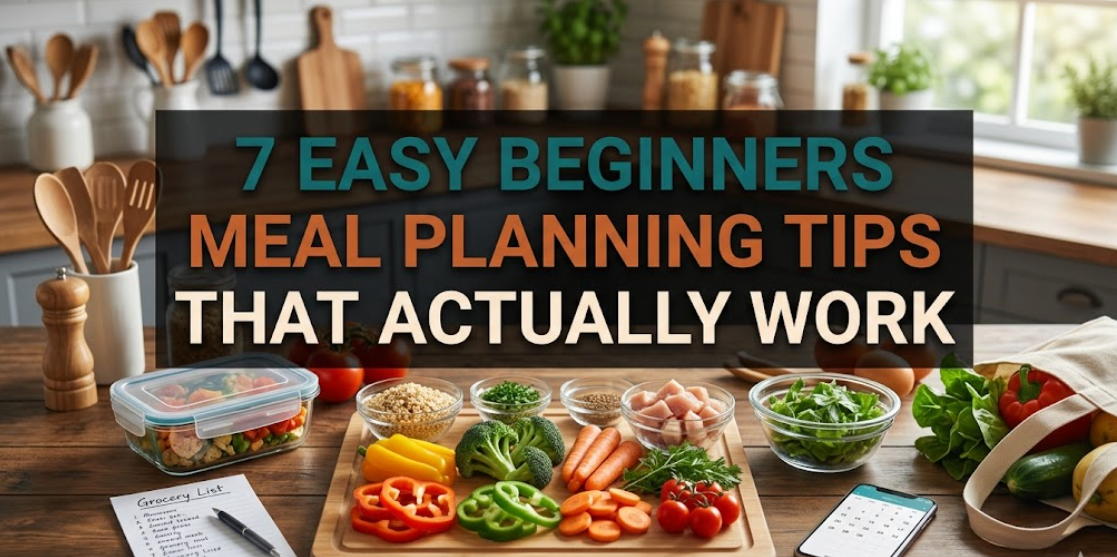
The seven tips below focus on what actually works in real life. They’re practical, flexible, and designed to help you move from “what should I eat?” to “I already know.”
tip 1: start with a 3-day plan, not a full week
One of the biggest beginner mistakes is trying to plan every meal for seven days. It sounds efficient, but it often leads to overwhelm or wasted food when plans change.
Instead, begin with a 3-day plan.
simple planning example:
| Day | Lunch | Dinner |
|---|---|---|
| Monday | Rice bowl | Chicken with vegetables |
| Tuesday | Leftover chicken wrap | Lentil curry |
| Wednesday | Salad with beans | Pasta with sauce |
benefits of a shorter plan:
| Advantage | Why It Matters |
|---|---|
| Flexibility | Easier to adjust midweek |
| Less waste | Ingredients stay fresh |
| Lower stress | Fewer decisions upfront |
Once you get comfortable, you can extend your plan gradually.
tip 2: repeat meals without overthinking
Many beginners assume every meal should be different. In reality, repetition is one of the most effective time-saving strategies.
repetition example:
| Meal Type | Option |
|---|---|
| Breakfast | Oats or eggs (daily rotation) |
| Lunch | Grain bowl variation |
| Dinner | 2–3 rotating main dishes |
time comparison:
| Approach | Planning Time | Cooking Stress |
|---|---|---|
| New meals daily | High | High |
| Repeated meals | Low | Low |
Repeating meals doesn’t mean eating the same thing every day—it means simplifying your choices.
tip 3: build meals using a simple formula
Instead of relying on recipes every time, use a basic structure to create meals quickly.
meal formula:
| Component | Examples |
|---|---|
| Protein | Chicken, eggs, beans |
| Carbs | Rice, pasta, potatoes |
| Vegetables | Broccoli, carrots, spinach |
| Flavor | Sauce, herbs, spices |
example combinations:
| Meal Idea | Components Used |
|---|---|
| Chicken rice bowl | Protein + carbs + vegetables |
| Pasta with vegetables | Carbs + vegetables + sauce |
| Bean salad | Protein + vegetables |
This formula removes the need to search for recipes constantly.
tip 4: plan around what you already have
Before making a grocery list, check your kitchen. This simple habit saves both money and time.
inventory check example:
| Item Found | Possible Use |
|---|---|
| Rice | Base for multiple meals |
| Eggs | Breakfast or quick dinner |
| Frozen veggies | Side dish or stir-fry |
planning benefit:
| Factor | Impact |
|---|---|
| Reduced waste | Use ingredients before expiry |
| Lower cost | Fewer unnecessary purchases |
| Faster planning | Fewer decisions needed |
This step takes 5–10 minutes but makes a noticeable difference.
tip 5: keep your grocery list simple and structured
A clear shopping list is essential for effective meal planning.
basic grocery list format:
| Category | Items |
|---|---|
| Proteins | Chicken, eggs, beans |
| Carbs | Rice, pasta, bread |
| Vegetables | Spinach, carrots, onions |
| Extras | Oil, spices, sauces |
time-saving comparison:
| Shopping Style | Time Spent | Efficiency |
|---|---|---|
| No list | 60–90 min | Low |
| Structured list | 30–45 min | High |
A simple list prevents unnecessary purchases and keeps your plan on track.
tip 6: prep a few ingredients in advance
Meal planning works best when paired with light preparation. You don’t need to cook everything—just prepare key ingredients.
example prep session:
| Ingredient | Prep Method | Time Needed | Use Cases |
|---|---|---|---|
| Rice | Cooked | 20 min | Multiple meals |
| Chicken | Grilled | 20 min | Wraps, bowls |
| Vegetables | Chopped | 15 min | Quick cooking |
weekly impact:
| Task | Without Prep | With Prep | Time Saved |
|---|---|---|---|
| Daily cooking | 60 min | 25 min | 35 min/day |
Even small prep steps can significantly reduce daily effort.
tip 7: keep a few “backup meals” ready
No plan is perfect. Some days won’t go as expected, and that’s where backup meals become essential.
backup ideas:
- frozen meals
- instant options
- simple ingredient combinations
backup system table:
| Backup Type | Prep Needed | When to Use |
|---|---|---|
| Frozen curry | None | No time to cook |
| Boiled eggs | Minimal | Quick meal or snack |
| Bread + spreads | None | Emergency option |
Having a backup prevents you from abandoning your plan entirely.
sample beginner meal planning routine
| Step | Time Needed | Description |
|---|---|---|
| Check inventory | 10 min | See what you already have |
| Plan meals | 20 min | Choose simple dishes |
| Make grocery list | 10 min | Organize by category |
| Shop | 45–60 min | Buy everything at once |
| Light prep | 1–2 hours | Prepare key ingredients |
total weekly time: about 3–4 hours
decision fatigue reduction chart
| Scenario | Daily Decisions | Stress Level |
|---|---|---|
| No planning | High | High |
| Basic meal planning | Low | Low |
Reducing decisions is one of the biggest hidden benefits of meal planning.
common beginner mistakes
| Mistake | Better Approach |
|---|---|
| Planning too much | Start with 3 days |
| Complex recipes | Keep meals simple |
| No flexibility | Allow changes |
| Skipping prep | Prep small components |
practical tips for staying consistent
- choose meals you actually enjoy
- repeat simple recipes
- keep your system flexible
- don’t aim for perfection
Meal planning becomes easier when it fits your lifestyle.
faqs
- how do beginners start meal planning?
Start small with a 2–3 day plan, simple meals, and a basic grocery list. Build from there gradually. - how much time does meal planning take?
Planning usually takes 20–30 minutes, with an additional 1–2 hours for prep if needed. - can meal planning save money?
Yes. It reduces food waste and prevents unnecessary or impulsive purchases. - what if i don’t follow my plan exactly?
That’s normal. Meal planning should be flexible, not strict. Adjust as needed. - do i need to cook every day?
Not necessarily. You can prepare ingredients or meals in advance to reduce daily cooking time. - how do i avoid getting bored?
Rotate a few meals, change flavors, and mix ingredients differently to keep things interesting.
Meal planning doesn’t need to be complicated to be effective. These seven tips focus on what actually works: simplicity, repetition, and small systems that reduce effort. Once you start using them, the daily question of what to eat becomes less of a challenge—and more of a routine you don’t have to think about.