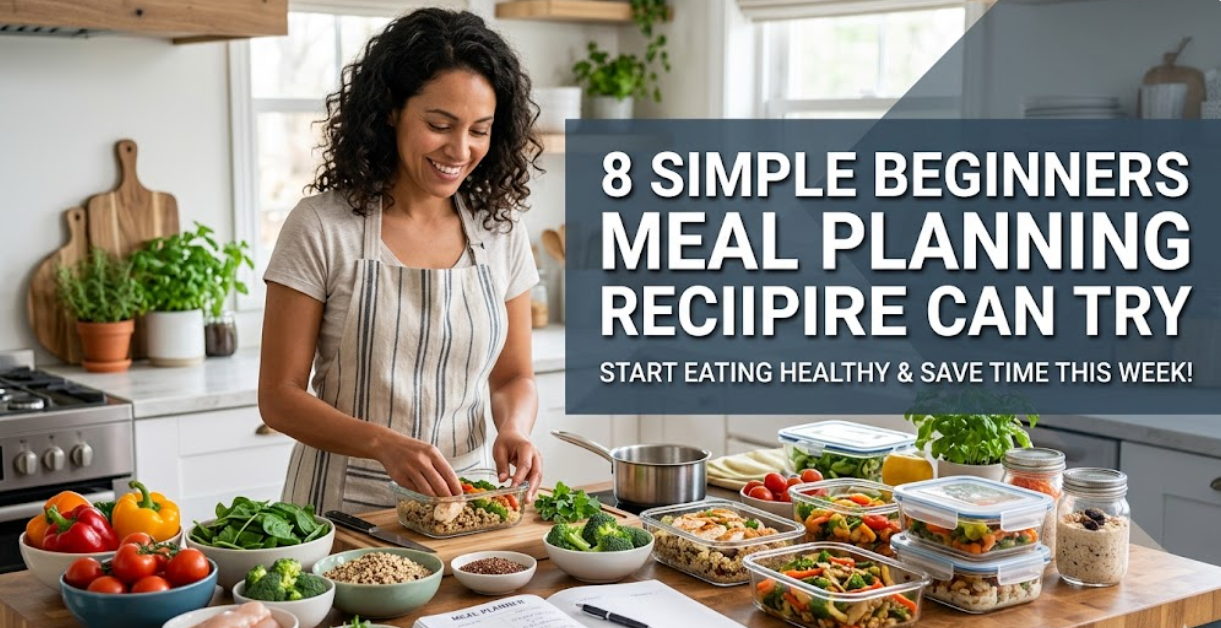
Meal planning sounds like one of those things that only highly organized people do, but in reality, it’s just a small habit that makes everyday life smoother. If you’ve ever stood in your kitchen wondering what to cook, or ended up ordering food because nothing was ready, you already know why planning matters. The good news is you don’t need complicated systems or fancy ingredients to get started.
This guide walks through eight simple, beginner-friendly recipes that fit neatly into a weekly meal plan. Along the way, you’ll also find practical tables, prep tips, and ways to mix and match meals without getting bored. Think of this as a realistic, no-pressure approach to eating better and saving time.
why simple meal planning works
Before jumping into recipes, it helps to understand why simplicity matters. Many beginners quit meal planning because they try to do too much at once. Complicated recipes, long shopping lists, and strict schedules can quickly become overwhelming.
A simple plan works because:
- It reduces decision fatigue
- It uses repeat ingredients
- It keeps cooking time manageable
- It allows flexibility when plans change
Instead of planning seven completely different meals, you’ll reuse ingredients across recipes. This keeps costs down and makes prep easier.
basic weekly meal planning structure
Here’s a beginner-friendly weekly structure you can follow:
| Day | Meal Focus | Prep Level |
|---|---|---|
| Monday | Quick stovetop meal | Low |
| Tuesday | Leftovers or remix | Very low |
| Wednesday | One-pot dish | Medium |
| Thursday | Light meal or salad | Low |
| Friday | Comfort meal | Medium |
| Saturday | Flexible / takeout | None |
| Sunday | Batch cooking | High |
This structure allows breathing room and avoids burnout.
recipe 1: simple chicken and rice bowl
This is one of the easiest meals you can make and perfect for beginners.
ingredients:
- 1 cup rice
- 2 chicken breasts
- 1 tablespoon oil
- Salt and pepper
- Mixed vegetables (fresh or frozen)
instructions:
Cook rice according to package instructions. While it cooks, season chicken with salt and pepper, then cook in a pan until done. Add vegetables and sauté for 5–7 minutes. Slice chicken and serve over rice.
why it works:
It’s balanced, customizable, and reheats well.
recipe 2: vegetable omelette wrap
Great for breakfast, lunch, or even dinner.
ingredients:
- 2 eggs
- 1 tortilla
- Chopped vegetables (onions, peppers, spinach)
- Salt and pepper
instructions:
Beat eggs and cook in a pan with vegetables. Once set, place on tortilla and wrap.
quick tip:
Make extra filling and store it for the next day.
recipe 3: one-pot lentil stew
This recipe is budget-friendly and filling.
ingredients:
- 1 cup lentils
- 1 chopped onion
- 2 tomatoes
- 2 cups water
- Salt, spices (optional)
instructions:
Combine everything in a pot and cook for 25–30 minutes until lentils are soft.
meal planning benefit:
You can make a large batch and eat it for 2–3 days.
recipe 4: pasta with garlic and vegetables
A simple comfort meal.
ingredients:
- 200g pasta
- 2 cloves garlic
- Mixed vegetables
- Oil
- Salt
instructions:
Cook pasta. In another pan, sauté garlic and vegetables in oil. Combine with pasta and season.
variation ideas:
Add chicken, beans, or cheese for extra protein.
recipe 5: baked potatoes with toppings
Minimal effort, maximum flexibility.
ingredients:
- 3–4 potatoes
- Oil
- Salt
- Toppings (cheese, yogurt, beans, vegetables)
instructions:
Bake potatoes at 200°C for about 45 minutes. Slice open and add toppings.
why beginners love it:
Almost impossible to mess up.
recipe 6: chickpea salad
Perfect for quick meals or side dishes.
ingredients:
- 1 can chickpeas
- Chopped cucumber
- Tomato
- Lemon juice
- Salt
instructions:
Mix everything in a bowl and chill before serving.
time-saving note:
No cooking required.
recipe 7: stir-fried noodles
Fast and satisfying.
ingredients:
- Noodles
- Vegetables
- Soy sauce
- Oil
instructions:
Cook noodles. Stir-fry vegetables, add noodles and soy sauce, mix well.
meal prep tip:
Make a big portion and store in containers.
recipe 8: simple yogurt parfait
Ideal for breakfast or snacks.
ingredients:
- Yogurt
- Fruits
- Granola or oats
instructions:
Layer ingredients in a bowl or jar.
benefit:
No cooking and highly customizable.
ingredient reuse chart
One key to successful meal planning is using the same ingredients across different meals.
| Ingredient | Recipes Used In |
|---|---|
| Rice | Chicken bowl, side for stew |
| Chicken | Chicken bowl, pasta add-on |
| Eggs | Omelette wrap |
| Vegetables | All recipes |
| Potatoes | Baked potatoes |
| Chickpeas | Salad, pasta add-on |
| Yogurt | Parfait, potato topping |
This reduces waste and simplifies shopping.
sample beginner shopping list
Here’s a practical grocery list based on the recipes:
| Category | Items |
|---|---|
| Grains | Rice, pasta, noodles, tortillas |
| Protein | Chicken, eggs, chickpeas, lentils |
| Vegetables | Onions, tomatoes, spinach, peppers |
| Dairy | Yogurt, cheese |
| Pantry | Oil, salt, spices, soy sauce |
time-saving prep schedule
Here’s a simple prep plan you can follow:
| Task | Time Needed |
|---|---|
| Chop vegetables | 20 minutes |
| Cook rice (batch) | 15 minutes |
| Boil lentils | 30 minutes |
| Prepare sauces | 10 minutes |
| Total prep time | ~1 hour |
Doing this once or twice a week can save hours later.
common beginner mistakes and fixes
mistake 1: planning too many meals
fix: start with 3–4 meals and repeat them
mistake 2: buying too many ingredients
fix: reuse ingredients across recipes
mistake 3: skipping prep time
fix: dedicate one hour weekly to prep
mistake 4: choosing complex recipes
fix: stick to 5–6 ingredient meals
mistake 5: not storing food properly
fix: use airtight containers and label meals
how to stay consistent
Consistency matters more than perfection. You don’t need to follow your plan exactly every week. Adjust based on your schedule and energy.
Some helpful habits:
- Keep a small list of go-to recipes
- Always have backup ingredients (eggs, rice, canned beans)
- Cook extra portions for busy days
- Accept that some days won’t go as planned
simple meal combination chart
You can mix and match components easily:
| Base | Protein | Add-ons |
|---|---|---|
| Rice | Chicken | Vegetables |
| Pasta | Chickpeas | Cheese |
| Noodles | Eggs | Sauce |
| Potatoes | Beans | Yogurt |
This keeps meals interesting without extra effort.
practical storage tips
- Use clear containers so you can see what’s inside
- Store cooked meals for up to 3–4 days in the fridge
- Freeze portions if needed
- Label containers with dates
realistic expectations
Meal planning is not about cooking every single day or eating perfectly balanced meals all the time. It’s about making life easier.
Some weeks you’ll cook more, some weeks less. The goal is to reduce stress, not create it.
FAQs
- how many meals should beginners plan per week?
Start with 3–4 meals. This keeps things manageable and avoids overwhelm. - can i repeat the same meals every week?
Yes. Repeating meals actually saves time and simplifies grocery shopping. You can slowly add variety later. - how long does meal prep usually take?
For beginners, around 1–2 hours per week is enough to prepare basics like rice, vegetables, and proteins. - what if i don’t like leftovers?
You can repurpose them. For example, leftover chicken can go into pasta or wraps the next day. - is meal planning expensive?
Not necessarily. It often saves money because you avoid waste and reduce takeout spending. - do i need special containers or tools?
No. Basic containers and standard kitchen tools are enough to get started.
final thoughts
Meal planning doesn’t have to be complicated or time-consuming. By focusing on simple recipes, reusable ingredients, and a flexible structure, you can build a system that actually works in real life. The eight recipes in this guide are just a starting point, but they cover everything you need: quick meals, batch cooking, and no-cook options.
Over time, you’ll naturally adjust and improve your routine. What matters most is starting small and staying consistent.