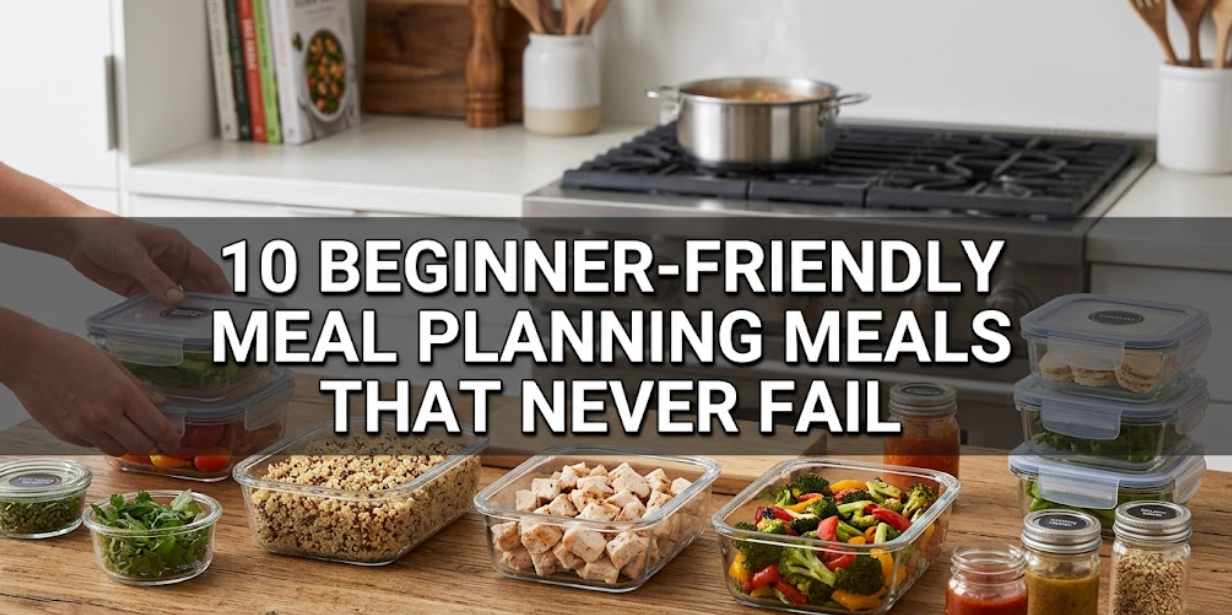
Getting started with meal planning often feels harder than it should. You open the fridge, see random ingredients, and still end up ordering food. The truth is, most beginners don’t fail because they lack cooking skills—they fail because they overcomplicate the process.
The key to successful meal planning is simplicity, repetition, and flexibility. You don’t need gourmet recipes or expensive ingredients. You need meals that are reliable, forgiving, and easy to prepare even on low-energy days.
This guide focuses on ten meals that consistently work for beginners. These meals are affordable, adaptable, and easy to batch cook. Along the way, you’ll also find practical tables, prep strategies, and small systems that make planning sustainable.
why beginner meal planning often fails
Before jumping into the meals, it helps to understand what usually goes wrong:
- choosing complicated recipes with too many ingredients
- not accounting for time constraints
- ignoring personal taste preferences
- failing to reuse ingredients across meals
- not planning for leftovers
The meals in this guide are designed to avoid these pitfalls.
meal 1: classic chicken and rice bowl
This is the foundation of beginner meal prep. It’s simple, filling, and endlessly customizable.
Basic components:
- grilled or baked chicken
- steamed rice
- vegetables (broccoli, carrots, or green beans)
- sauce (soy, garlic, yogurt-based, or chili)
Why it works:
- easy to cook in bulk
- stores well for 3–4 days
- adaptable to different flavors
quick prep chart:
| component | prep time | cook time | storage life |
|---|---|---|---|
| chicken | 10 mins | 20 mins | 4 days |
| rice | 5 mins | 15 mins | 4 days |
| vegetables | 10 mins | 10 mins | 3 days |
meal 2: one-pot pasta
One-pot pasta eliminates the need for multiple pans and reduces cleanup time.
Basic components:
- pasta
- tomato sauce
- garlic and onion
- protein (optional: chicken, beans, or ground meat)
Why it works:
- minimal cleanup
- beginner-friendly cooking method
- highly forgiving if slightly overcooked
efficiency comparison:
| method | dishes used | total time | difficulty |
|---|---|---|---|
| traditional | 3–4 | 35 mins | medium |
| one-pot method | 1 | 25 mins | easy |
meal 3: stir-fry mix
A stir-fry is one of the fastest ways to turn random ingredients into a complete meal.
Basic components:
- mixed vegetables
- protein (chicken, tofu, or eggs)
- soy sauce or stir-fry sauce
- rice or noodles
Why it works:
- cooks in under 20 minutes
- reduces food waste
- flexible ingredient combinations
ingredient flexibility chart:
| ingredient type | examples |
|---|---|
| vegetables | bell peppers, cabbage, carrots |
| protein | chicken, tofu, eggs |
| base | rice, noodles |
| sauce | soy, teriyaki, garlic sauce |
meal 4: sheet pan chicken and vegetables
Everything cooks together in one tray, making it ideal for beginners.
Basic components:
- chicken pieces
- potatoes
- carrots or zucchini
- oil and seasoning
Why it works:
- almost no active cooking time
- easy cleanup
- consistent results
time breakdown:
| step | time required |
|---|---|
| prep | 15 mins |
| baking | 35–40 mins |
| cleanup | 5 mins |
meal 5: simple egg fried rice
Perfect for using leftover rice.
Basic components:
- cooked rice
- eggs
- vegetables
- soy sauce
Why it works:
- very low cost
- quick cooking time
- ideal for leftovers
cost estimate per serving:
| ingredient | estimated cost |
|---|---|
| rice | low |
| eggs | low |
| vegetables | low–medium |
| total | very low |
meal 6: wraps or burrito bowls
These are versatile and require minimal cooking.
Basic components:
- tortilla or rice base
- protein (beans, chicken, or beef)
- vegetables
- sauce or dressing
Why it works:
- customizable for different diets
- easy to assemble
- portable
meal assembly time:
| step | time |
|---|---|
| prep | 10 mins |
| assembly | 5 mins |
meal 7: lentil or bean curry
A budget-friendly and nutritious option.
Basic components:
- lentils or beans
- spices
- tomatoes
- onion and garlic
Why it works:
- cheap ingredients
- high in protein and fiber
- freezes well
nutrition overview:
| nutrient | benefit |
|---|---|
| protein | muscle repair |
| fiber | digestion support |
| iron | energy levels |
meal 8: baked potatoes with toppings
This meal is simple but surprisingly satisfying.
Basic components:
- potatoes
- toppings (cheese, beans, yogurt, vegetables)
Why it works:
- minimal ingredients
- flexible toppings
- filling and affordable
topping ideas chart:
| category | examples |
|---|---|
| protein | beans, chicken |
| dairy | cheese, yogurt |
| vegetables | spinach, corn |
| sauces | garlic sauce, salsa |
meal 9: overnight oats or simple breakfast bowls
Meal planning isn’t just for lunch and dinner.
Basic components:
- oats
- milk or yogurt
- fruit
- nuts or seeds
Why it works:
- no cooking required
- saves morning time
- customizable flavors
prep comparison:
| type | prep time | cooking |
|---|---|---|
| overnight oats | 5 mins | none |
| traditional oats | 10 mins | stove |
meal 10: basic soup or broth-based meal
Soups are forgiving and ideal for beginners.
Basic components:
- broth
- vegetables
- protein (optional)
- grains or noodles
Why it works:
- scalable for large batches
- easy to store and freeze
- great for leftovers
storage chart:
| storage method | duration |
|---|---|
| refrigerator | 3–4 days |
| freezer | up to 2 months |
weekly meal planning structure for beginners
A simple weekly plan helps avoid decision fatigue.
example structure:
| day | meal idea |
|---|---|
| monday | chicken and rice |
| tuesday | stir-fry |
| wednesday | pasta |
| thursday | wraps |
| friday | fried rice |
| saturday | curry |
| sunday | soup or leftovers |
This approach reduces stress and keeps grocery shopping predictable.
how to shop efficiently for these meals
Instead of buying for each recipe separately, group ingredients:
core ingredient system:
| category | items |
|---|---|
| protein | chicken, eggs, beans |
| carbs | rice, pasta, potatoes |
| vegetables | mixed seasonal vegetables |
| extras | sauces, spices |
This system reduces waste and lowers cost.
time-saving strategies for beginners
- batch cook proteins
Cook chicken or beans once and use them across multiple meals. - pre-cut vegetables
Spend 30 minutes chopping vegetables for the week. - cook double portions
Always cook more than you need. - use simple seasoning
Salt, pepper, garlic, and one sauce can go a long way.
common beginner mistakes and fixes
| mistake | fix |
|---|---|
| cooking too many new recipes | repeat 2–3 meals weekly |
| ignoring storage | use containers and label dates |
| overbuying ingredients | stick to a core list |
| skipping prep day | schedule 1–2 hours weekly |
how to stay consistent
Consistency comes from reducing effort, not increasing motivation.
- keep meals repetitive but slightly varied
- don’t aim for perfection
- allow flexibility for busy days
- celebrate small wins
frequently asked questions
- how many meals should a beginner plan each week?
Start with 3–4 meals and repeat them. Planning every single meal can feel overwhelming at first. - how long does meal prep usually take?
Most beginner setups take 1–2 hours per week, depending on the number of meals. - can I meal prep without cooking skills?
Yes. Many meals like overnight oats, wraps, and simple bowls require minimal or no cooking. - how do I avoid getting bored of the same meals?
Change sauces, spices, or side vegetables instead of switching the entire recipe. - is meal planning expensive?
No. It often reduces food costs because you avoid waste and impulse purchases. - what if I don’t have time every week?
Prepare flexible ingredients like cooked rice or protein that can be turned into quick meals.
final thoughts
Meal planning doesn’t need to be complicated to be effective. The meals listed here work because they remove unnecessary friction. They are forgiving, adaptable, and practical for real life.
If you’re just starting out, focus on building a simple system rather than chasing variety. Once the habit forms, you can expand your meals gradually.
Start with two or three of these meals this week. Keep it simple. Stay consistent. That’s where real progress begins.