
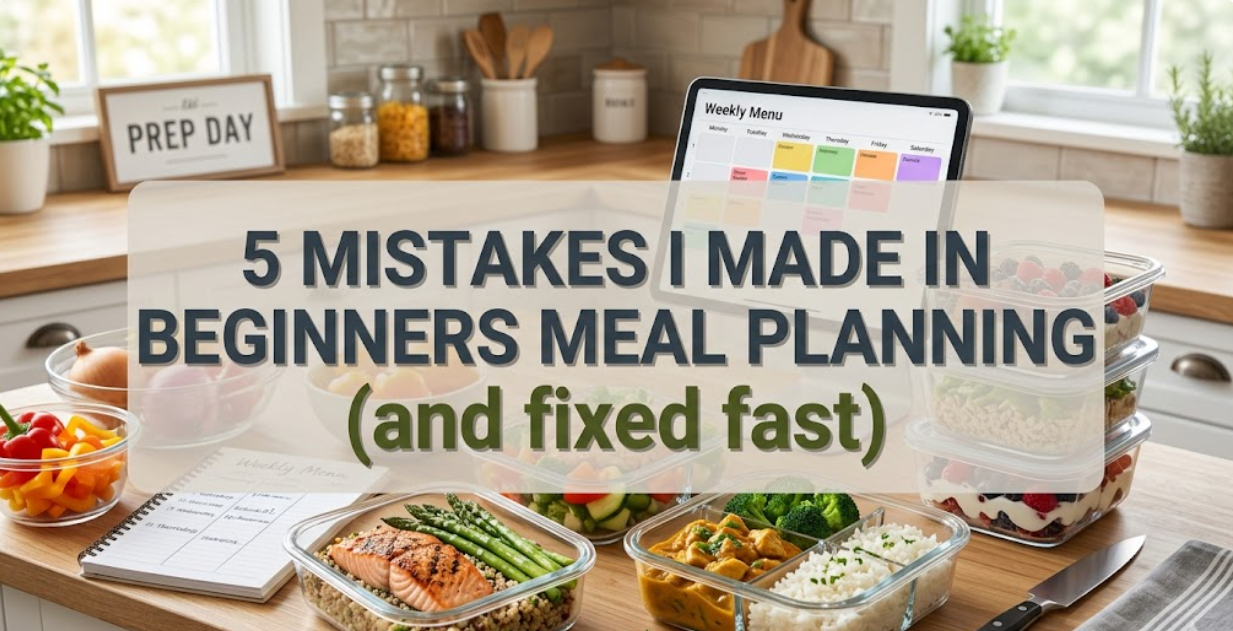
When I first decided to “get organized” with my meals, I thought I was stepping into a life of efficiency, health, and maybe even a bit of financial wisdom. What I actually stepped into was a quiet mess of over-ambition, poor planning, wasted groceries, and a fridge full of containers I eventually ignored.
Meal planning looks deceptively simple from the outside. Write a list, buy groceries, cook, store, repeat. But once you try to sustain it for more than a week, reality shows up quickly. Life interrupts. Motivation dips. Taste fatigue creeps in. And suddenly, your carefully planned system collapses.
This article is not about perfect systems. It’s about mistakes — the real kind — and how small adjustments turned things around quickly. These five mistakes were the turning points that helped me build a practical, sustainable routine instead of a rigid, frustrating one.
mistake 1: planning meals I didn’t actually want to eat
In the beginning, I made the classic mistake of planning meals based on what I thought I should eat instead of what I genuinely wanted. My list was full of “healthy” recipes I had no emotional connection to — bland chicken, repetitive salads, and overly complicated dishes I found online.
By midweek, I was already bored. By Friday, I was ordering takeout.
The problem wasn’t discipline. It was misalignment.
why this failed
Food isn’t just fuel. It’s comfort, habit, and culture. Ignoring that leads to resistance. When meals don’t excite you even slightly, your brain starts negotiating alternatives.
I realized that motivation doesn’t come from forcing yourself — it comes from removing friction.
what I changed fast
I rebuilt my meal plan around meals I already liked, then made small improvements instead of complete overhauls.
Instead of:
- plain grilled chicken → I made spiced chicken wraps
- boring salads → I added sauces, textures, and variety
- complex recipes → I simplified them into repeatable versions
I also created a “go-to meals list” — a set of 10–15 dishes I genuinely enjoyed.
table: before vs after meal selection
| category | before approach | after approach |
|---|---|---|
| meal choice | based on trends | based on personal preference |
| recipe complexity | high | simple and repeatable |
| enjoyment level | low | consistently satisfying |
| consistency | inconsistent | sustainable |
key takeaway
If you don’t look forward to eating your food, your plan will fail — no matter how “healthy” it looks on paper.
mistake 2: overplanning the entire week in detail
At first, I treated meal planning like a rigid schedule. Breakfast, lunch, dinner — all locked in for seven days. Every ingredient pre-decided. Every portion mapped.
It felt productive. It wasn’t.
By day three, something always went off-track — a busy day, a mood shift, leftovers, or unexpected plans. And when one meal got skipped, the entire system started falling apart.
why this failed
Overplanning creates fragility. The more detailed your plan, the less adaptable it becomes.
Life is unpredictable. Systems need flexibility.
what I changed fast
Instead of planning exact meals for each day, I switched to a flexible structure:
- I planned 3–4 main meals for the week
- I prepped ingredients, not full dishes (when possible)
- I allowed meals to shift between days
I also used a “meal pool” system:
Instead of “Monday = rice and chicken,” I had options like:
- chicken stir-fry
- rice bowl
- wraps
I chose based on mood and time.
simple planning chart
| planning style | rigidity level | adaptability | success rate |
|---|---|---|---|
| fixed daily plan | high | low | low |
| flexible pool | medium | high | high |
key takeaway
A good meal plan bends without breaking. Structure helps — rigidity hurts.
mistake 3: buying too many ingredients at once
This one hit both my wallet and my fridge.
In my early attempts, I bought everything for the week in one go — often more than I needed. Vegetables spoiled, herbs wilted, and random ingredients sat unused.
I was planning like a professional kitchen but cooking like a beginner.
why this failed
Overbuying creates waste and pressure. When your fridge is packed, you feel obligated to use everything — which leads to stress, not efficiency.
what I changed fast
I split my grocery shopping into two smaller trips per week.
I also started prioritizing versatile ingredients:
- onions, tomatoes, eggs
- rice, pasta, potatoes
- chicken or lentils
These could be reused across multiple meals.
I reduced “one-recipe-only” ingredients unless I had a clear plan to reuse them.
table: grocery strategy shift
| factor | before | after |
|---|---|---|
| shopping frequency | once per week | twice per week |
| ingredient type | specialized | versatile |
| food waste | high | low |
| grocery cost control | inconsistent | improved |
bonus trick that helped
I created a “use-first” section in my fridge — anything that needed to be used soon went there. It reduced waste almost immediately.
key takeaway
Buying less, more often, is usually smarter than buying everything upfront.
mistake 4: ignoring prep time and energy levels
I used to plan meals as if I had unlimited time and energy every day. I didn’t.
After a long day, the last thing I wanted was a complicated cooking process — even if I had all the ingredients ready.
That’s where my plan quietly failed most often.
why this failed
Meal planning isn’t just about food — it’s about timing and energy. If your plan doesn’t match your real-life schedule, it becomes unrealistic.
what I changed fast
I categorized meals based on effort:
- low effort (10–15 minutes)
- medium effort (20–30 minutes)
- high effort (40+ minutes)
Then I matched them to my week:
- busy days → low effort meals
- lighter days → medium meals
- weekends → optional high effort
effort planning chart
| day type | energy level | meal type | example |
|---|---|---|---|
| busy weekday | low | quick meals | eggs, wraps, stir-fry |
| moderate day | medium | balanced cooking | rice bowls, pasta |
| free day | high | full meals | slow-cooked dishes |
This simple shift removed friction instantly.
key takeaway
Plan meals based on your energy, not your expectations.
mistake 5: trying to be perfect from day one
This was the biggest mistake — and the most subtle.
I wanted everything to be perfect:
- clean eating
- zero waste
- perfect portions
- consistent schedule
It lasted exactly one week.
why this failed
Perfection creates pressure. Pressure leads to burnout.
Meal planning is a skill, not a switch.
what I changed fast
I lowered the bar intentionally.
Instead of aiming for perfection, I aimed for:
- “better than last week”
- “less waste than before”
- “one improvement at a time”
I allowed:
- repeat meals
- simple recipes
- occasional takeout without guilt
progress vs perfection table
| mindset | result |
|---|---|
| perfection | burnout, inconsistency |
| progress | sustainability, improvement |
unexpected benefit
Once I stopped chasing perfection, consistency improved naturally.
key takeaway
Done consistently beats perfect occasionally.
how these fixes changed everything
Within a few weeks of making these adjustments, meal planning stopped feeling like a chore and started feeling like support.
I noticed:
- fewer last-minute food decisions
- less wasted food
- better control over spending
- more consistent eating habits
summary table of all mistakes and fixes
| mistake | quick fix | result |
|---|---|---|
| planning unwanted meals | choose meals you enjoy | higher consistency |
| overplanning the week | use flexible meal pools | better adaptability |
| overbuying groceries | shop smaller, more often | less waste |
| ignoring energy levels | match meals to effort | easier execution |
| chasing perfection | focus on progress | long-term sustainability |
final thoughts
Meal planning isn’t about control — it’s about reducing decision fatigue and making daily life easier. The moment it becomes stressful or restrictive, something needs to change.
The five mistakes above weren’t failures. They were necessary adjustments that made the system realistic.
If you’re just starting, expect things to go wrong. That’s part of the process. The goal isn’t to avoid mistakes — it’s to fix them quickly and move forward.
faqs
- how long does it take to get good at meal planning?
Most people start feeling comfortable within 2–4 weeks. The key is consistency, not perfection. Small improvements each week add up quickly.
- should I prep all meals in advance?
Not necessarily. Some people prefer full meal prep, while others do better with ingredient prep. Choose what fits your routine and energy levels.
- how do I avoid getting bored with meals?
Rotate a small set of meals instead of cooking something new every day. You can also change sauces, spices, or sides to keep things interesting.
- is meal planning actually cheaper?
Yes, in most cases. Planning reduces impulse buying, food waste, and takeout expenses. However, overbuying can cancel those benefits.
- what if my schedule is unpredictable?
Use a flexible system instead of fixed daily plans. Keep quick meal options available for busy days.
- how many meals should I plan each week?
Start with 3–4 main meals and build from there. You don’t need to plan every single meal to see results.