
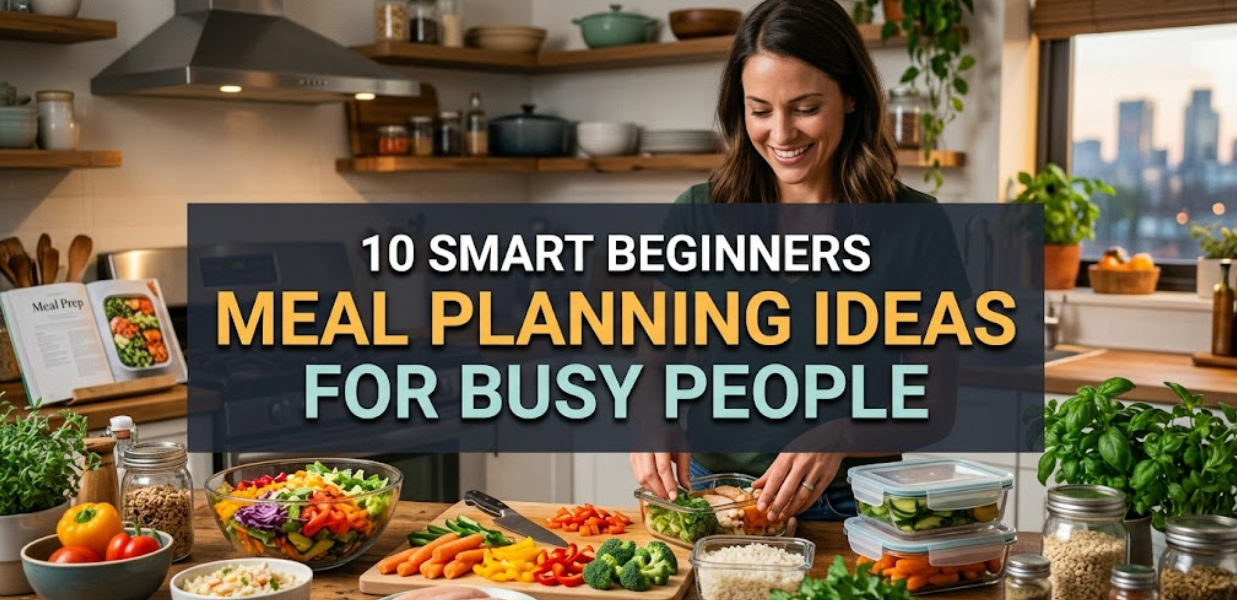
There’s a moment most busy people recognize: it’s late, energy is gone, and the question “what should I eat?” feels heavier than it should. Meal planning, at first glance, sounds like one more task in an already crowded schedule. But when approached simply, it becomes a quiet system that removes daily friction instead of adding to it.
For beginners, the mistake is often trying to do too much at once—complex recipes, rigid schedules, or planning every single bite of the week. The truth is, effective meal planning doesn’t require perfection. It just needs a structure that fits your life.
This guide walks through ten smart, beginner-friendly meal planning ideas designed specifically for busy people. You’ll find practical examples, realistic timelines, and useful tables that make the process easier to follow and repeat.
understanding the goal of meal planning
Before diving into strategies, it’s worth clarifying what meal planning is—and what it isn’t.
Meal planning is not:
- Cooking everything in advance
- Following strict diets
- Spending hours in the kitchen
Meal planning is:
- Deciding meals ahead of time
- Reducing daily decisions
- Making grocery shopping more efficient
When done right, it simplifies your week instead of complicating it.
why beginners often struggle
Most beginners face the same challenges:
| Challenge | What Happens | Result |
|---|---|---|
| Overplanning | Too many recipes | Burnout |
| Lack of time | Skipping prep | Eating out |
| No structure | Random meals | Waste |
| Boredom | Repetitive meals | Abandoning plan |
The ideas below are designed to solve these problems without adding stress.
idea 1: start with just 3–4 planned meals per week
One of the biggest mistakes beginners make is planning all 21 weekly meals. That’s unnecessary and overwhelming.
Instead, plan:
- 3 dinners
- 2 lunches
- Keep breakfasts simple
This gives you structure without pressure.
example weekly plan (minimal approach)
| Day | Meal Plan |
|---|---|
| Monday | Chicken rice bowl |
| Tuesday | Leftovers |
| Wednesday | Pasta |
| Thursday | Free choice |
| Friday | Stir-fry |
| Weekend | Flexible |
This approach allows breathing room while still reducing decision fatigue.
idea 2: use “template meals” instead of recipes
Instead of following detailed recipes, think in templates. A template is a simple formula you can reuse.
Examples:
- Protein + grain + vegetables
- Wrap + filling + sauce
- Bowl + base + topping
meal template examples
| Template | Example 1 | Example 2 |
|---|---|---|
| Bowl | Rice + chicken + veggies | Quinoa + tofu + salad |
| Wrap | Chicken + sauce | Beans + cheese |
| Stir-fry | Beef + vegetables | Tofu + noodles |
Templates save time because you don’t need to search for recipes every day.
idea 3: pick one “anchor meal” and build around it
An anchor meal is a dish you cook in a slightly larger quantity and reuse in different ways.
For example:
Cook grilled chicken once, then use it for:
- Rice bowls
- Sandwiches
- Salads
anchor meal reuse chart
| Day | Meal Using Same Protein |
|---|---|
| Day 1 | Chicken with rice |
| Day 2 | Chicken wrap |
| Day 3 | Chicken salad |
This reduces cooking time and simplifies planning.
idea 4: plan meals that share ingredients
Buying completely different ingredients for each meal leads to waste and higher costs.
Instead, overlap ingredients across meals.
example ingredient overlap
| Ingredient | Meal 1 | Meal 2 | Meal 3 |
|---|---|---|---|
| Rice | Bowl | Stir-fry | Side |
| Eggs | Breakfast | Fried rice | Omelet |
| Vegetables | Stir-fry | Soup | Salad |
This approach keeps your grocery list short and efficient.
idea 5: keep a “go-to meal list”
Instead of thinking from scratch every week, build a personal list of easy meals you enjoy.
Example list:
- Chicken stir-fry
- Lentil curry
- Pasta with sauce
- Omelet and toast
Over time, this list becomes your planning shortcut.
go-to meal rotation
| Week | Meals Chosen |
|---|---|
| Week 1 | Stir-fry, pasta, curry |
| Week 2 | Omelet, rice bowl, wraps |
| Week 3 | Repeat favorites |
This removes the stress of constantly searching for new ideas.
idea 6: prep ingredients, not full meals
For busy people, flexibility matters. Instead of cooking everything ahead, prepare components:
- Cook rice or grains
- Chop vegetables
- Marinate protein
Then assemble meals quickly during the week.
time comparison chart
| Task | Without Prep | With Prep |
|---|---|---|
| Cooking dinner | 60 min | 20–30 min |
| Decision making | High | Low |
| Effort | High | Moderate |
This method keeps meals fresh while saving time.
idea 7: assign theme days
Theme days simplify planning by narrowing choices.
Examples:
- Monday: Rice bowls
- Tuesday: Pasta
- Wednesday: Stir-fry
- Thursday: Wraps
You don’t need to decide from scratch—just choose within the theme.
weekly theme example
| Day | Theme | Meal |
|---|---|---|
| Monday | Bowl | Chicken rice bowl |
| Tuesday | Pasta | Tomato pasta |
| Wednesday | Stir-fry | Beef stir-fry |
| Thursday | Wrap | Chicken wrap |
This structure is especially helpful for beginners.
idea 8: use quick-cooking meals strategically
Not every meal needs to be elaborate. Some days require fast options.
Quick meal ideas:
- Eggs and toast
- Stir-fry
- Sandwiches
- Instant oats
quick meal timing
| Meal | Prep Time |
|---|---|
| Omelet | 10 min |
| Stir-fry | 20 min |
| Sandwich | 5–10 min |
| Oats | 5 min |
Planning a few of these ensures you always have a fallback.
idea 9: shop with a focused grocery list
A good meal plan leads to a simple grocery list. Avoid wandering through the store without a plan.
basic grocery structure
| Category | Items |
|---|---|
| Protein | Chicken, eggs, beans |
| Grains | Rice, pasta |
| Vegetables | Seasonal produce |
| Extras | Yogurt, sauces |
Stick to the list to avoid unnecessary spending.
idea 10: review and adjust weekly
Meal planning improves with practice. At the end of each week, take a few minutes to reflect:
- What meals worked?
- What went uneaten?
- What felt difficult?
weekly reflection example
| Question | Answer |
|---|---|
| Most used meal | Rice bowl |
| Least used meal | Soup |
| Adjustment | Reduce soup next week |
This small habit makes future planning easier and more effective.
sample beginner-friendly weekly plan
Here’s a realistic plan combining several ideas:
Meals:
- Chicken rice bowl
- Vegetable stir-fry
- Pasta with sauce
- Omelet meals
Prep:
- Cook rice in advance
- Chop vegetables
- Marinate chicken
estimated weekly effort
| Task | Time Required |
|---|---|
| Planning | 15–20 min |
| Shopping | 45–60 min |
| Prep | 60–90 min |
Total: under 3 hours for the entire week
common beginner mistakes to avoid
Trying to plan every detail often leads to frustration. Keep things simple and flexible.
Another mistake is ignoring personal preferences. If you don’t enjoy a meal, you won’t stick to the plan.
Finally, avoid overbuying. Start small and scale up once you’re comfortable.
how meal planning saves time and energy
The biggest benefit isn’t just saving time in the kitchen—it’s reducing mental load. Instead of making multiple food decisions daily, you decide once and follow through.
Over time, this creates a routine that feels natural rather than forced.
faq section
- how do i start meal planning as a beginner?
Start small by planning 3–4 meals per week. Focus on simple dishes and build from there. - how much time does meal planning take?
Planning usually takes 15–30 minutes, and prep can take 1–2 hours depending on how much you cook. - do i need to cook everything in advance?
No. You can prep ingredients instead and cook meals fresh during the week. - what if i don’t follow my meal plan?
That’s normal. Adjust your plan to be more flexible rather than abandoning it completely. - how do i avoid getting bored with meals?
Use different spices, sauces, and cooking styles to create variety from the same ingredients. - is meal planning suitable for very busy schedules?
Yes. In fact, it’s most useful for busy people because it reduces daily decision-making and saves time.
closing thoughts
Meal planning doesn’t need to be complicated to be effective. For beginners, the smartest approach is to keep things simple, flexible, and realistic. Start with a few meals, reuse ingredients, and build habits gradually.
Over time, what once felt like extra effort becomes second nature. And when that happens, you’ll notice something important: less stress, fewer last-minute decisions, and a smoother daily routine that supports your lifestyle instead of slowing it down.