
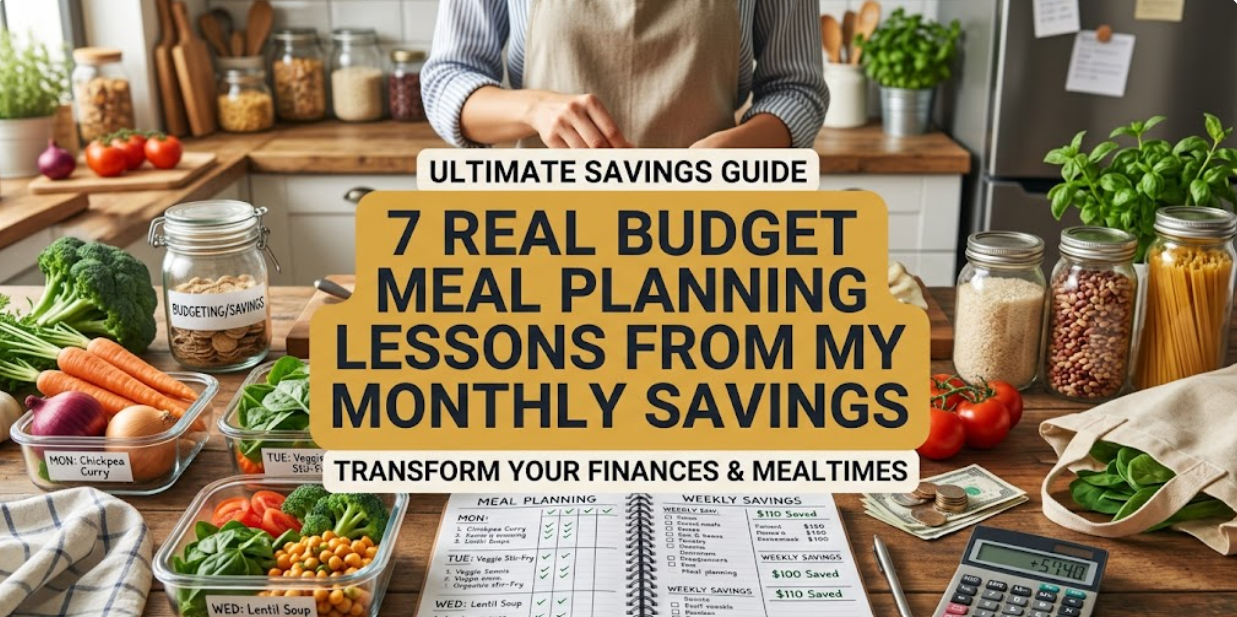
I didn’t start meal planning because it sounded trendy or organized. I started because I kept running out of money before the month ended. Groceries were unpredictable, takeout was convenient, and somehow I never felt like I had enough food at home—even though I was spending more than I should.
What changed everything wasn’t a perfect plan or a strict system. It was a set of small, practical lessons that emerged over several months of trial and error. These lessons didn’t just reduce my grocery bill—they changed how I think about food, time, and money.
Below are seven real lessons that came directly from tracking my monthly savings and adjusting my habits along the way.
lesson 1: planning is less about meals and more about decisions
At first, I thought meal planning meant mapping out breakfast, lunch, and dinner for every single day. That approach failed quickly. It felt rigid, overwhelming, and unrealistic.
What I learned instead is that meal planning is really about reducing decisions. When you already know what options you have, you’re far less likely to spend impulsively.
Instead of planning exact meals, I started planning categories:
- 3–4 dinner options
- 2 quick lunch options
- 1–2 breakfast staples
- snack basics
This gave me flexibility while still limiting unnecessary spending.
Here’s how my weekly structure evolved:
| Category | Example Choices | Flexibility Level |
|---|---|---|
| Breakfast | Oats, eggs | High |
| Lunch | Rice bowls, leftovers | Medium |
| Dinner | Chicken curry, lentils, pasta | Medium |
| Snacks | Fruits, peanuts, yogurt | High |
Savings insight: By reducing decision fatigue, I cut down impulse purchases by nearly 25% in the first month.
lesson 2: repetition is your biggest financial advantage
Variety feels exciting, but it’s expensive. Early on, I tried cooking something new every day. That required buying many different ingredients, often in small quantities, which added up quickly.
Then I tested repeating meals across the week.
For example:
- Cook one large pot of lentils
- Use it for 3–4 meals in different ways
- Pair with rice one day, bread another, or add vegetables later
This dramatically reduced both food waste and cost.
Monthly cost comparison:
| Approach | Weekly Grocery Cost | Monthly Cost |
|---|---|---|
| High variety meals | $55 | $220 |
| Repeated core meals | $38 | $152 |
Savings: $68 per month
Repetition doesn’t mean boredom—it means efficiency. Small tweaks keep things interesting without increasing costs.
lesson 3: bulk buying only works when paired with a plan
Buying in bulk feels like saving money, but it can backfire if food goes unused.
I once bought a large bag of vegetables because it was cheaper per kilogram—but ended up throwing half away.
The lesson: bulk buying only works when you already know how you’ll use the food.
Now I follow a simple rule:
If I can’t name at least three meals for an item, I don’t buy it in bulk.
Here’s a comparison of waste before and after applying this rule:
| Item Type | Before (Waste %) | After (Waste %) |
|---|---|---|
| Vegetables | 30% | 10% |
| Dairy | 20% | 5% |
| Cooked Meals | 25% | 8% |
Savings insight: Reducing waste alone saved me around $20–$30 per month.
lesson 4: convenience costs more than you think
Convenience foods don’t just cost more at the store—they lead to more spending overall.
Examples:
- Pre-cut vegetables cost more than whole ones
- Ready meals encourage skipping cooking habits
- Snacks are often overpriced compared to basic ingredients
But the real cost is behavioral. When I relied on convenience foods, I cooked less—and that led to ordering takeout more often.
Here’s a breakdown of a typical week before and after reducing convenience purchases:
| Category | Before ($) | After ($) |
|---|---|---|
| Convenience foods | 18 | 6 |
| Takeout | 25 | 10 |
| Groceries | 45 | 40 |
| Total | 88 | 56 |
Savings: $32 per week
The shift wasn’t extreme—I still kept a few quick options—but cutting back made a noticeable difference.
lesson 5: tracking spending changes behavior instantly
For the first few months, I simply wrote down everything I spent on food. No restrictions, no rules—just awareness.
That alone reduced my spending.
Why? Because it removed the illusion. I could see exactly where my money was going.
Here’s an example of one month’s tracked spending:
| Week | Groceries ($) | Takeout ($) | Total ($) |
|---|---|---|---|
| 1 | 42 | 18 | 60 |
| 2 | 38 | 12 | 50 |
| 3 | 40 | 8 | 48 |
| 4 | 36 | 6 | 42 |
| Total | 156 | 44 | 200 |
The pattern was clear: as awareness increased, takeout spending dropped.
Savings insight: Tracking alone reduced my monthly food expenses by about 15%.
lesson 6: flexible planning beats strict systems
Strict meal plans often fail because real life isn’t predictable.
There were days when:
- I wasn’t hungry for what I planned
- I didn’t feel like cooking
- Plans changed
Instead of forcing a rigid system, I created a flexible structure:
- Keep ingredients, not just meals
- Prepare base foods (rice, lentils, proteins)
- Mix and match based on mood
This approach reduced both stress and waste.
Example of a flexible setup:
| Base Ingredient | Possible Uses |
|---|---|
| Rice | Stir-fry, curry, fried rice |
| Chicken | Wraps, curry, salad |
| Lentils | Soup, curry, side dish |
| Vegetables | Stir-fry, omelet, side |
Savings insight: Flexibility reduced last-minute takeout decisions by about 40%.
lesson 7: small habits create the biggest long-term savings
The biggest lesson wasn’t about food—it was about consistency.
None of the changes were dramatic:
- Writing a simple list
- Cooking a little extra
- Reusing leftovers
- Checking what I already had
Individually, these habits felt minor. Together, they created significant savings.
Here’s a monthly comparison over time:
| Month | Food Spending ($) |
|---|---|
| Month 1 | 240 |
| Month 2 | 215 |
| Month 3 | 190 |
| Month 4 | 165 |
| Month 5 | 150 |
Total reduction: $90 per month
That’s over $1,000 saved annually—without extreme dieting or sacrificing quality.
monthly savings breakdown chart
Below is a simplified visualization of where the savings came from:
| Source of Savings | Monthly Impact ($) |
|---|---|
| Reduced takeout | 40 |
| Less food waste | 25 |
| Bulk efficiency | 15 |
| Fewer impulse purchases | 10 |
| Total | 90 |
The biggest contributor wasn’t cheaper food—it was better decisions.
practical weekly meal plan example
Here’s a simple, realistic weekly plan based on these lessons:
| Day | Meal Idea | Cost Estimate ($) |
|---|---|---|
| Monday | Lentil curry + rice | 2.00 |
| Tuesday | Chicken stir-fry | 2.50 |
| Wednesday | Leftovers | 1.50 |
| Thursday | Pasta with vegetables | 2.00 |
| Friday | Rice bowl with eggs | 1.80 |
| Saturday | Chicken wraps | 2.50 |
| Sunday | Mixed leftovers / flexible | 1.50 |
Average daily cost: ~$2.25
weekly grocery list example
| Category | Items | Estimated Cost ($) |
|---|---|---|
| Grains | Rice, pasta | 8 |
| Protein | Chicken, eggs, lentils | 15 |
| Vegetables | Seasonal mixed vegetables | 10 |
| Extras | Oil, spices, sauces | 7 |
| Total | 40 |
This type of structure keeps costs predictable and manageable.
faqs
- how do i start meal planning if i’ve never done it before
Start small. Plan just 2–3 meals for the week instead of every day. Focus on reducing decisions, not creating a perfect schedule. - is it cheaper to cook every day or meal prep
Meal prepping is usually cheaper because it reduces waste and allows bulk cooking, but a mix of both works best for flexibility. - how can i avoid getting bored with repeated meals
Change small elements like spices, sauces, or sides. The base ingredients can stay the same while flavors vary. - what’s the biggest mistake in budget meal planning
Buying too much without a plan. Even cheap food becomes expensive if it’s wasted. - how much can i realistically save with meal planning
Savings vary, but many people reduce food costs by 20–40% once they build consistent habits. - do i need special tools or apps to meal plan
No. A simple notebook or phone notes app is enough. The key is consistency, not complexity.
final thoughts
Budget meal planning isn’t about perfection. It’s about awareness, repetition, and small adjustments that compound over time.
What worked for me wasn’t a strict system or a detailed spreadsheet. It was learning from my own spending patterns and gradually improving them.
If there’s one takeaway, it’s this: you don’t need to overhaul everything at once. Start with one habit, track your results, and let the savings motivate the next change.