
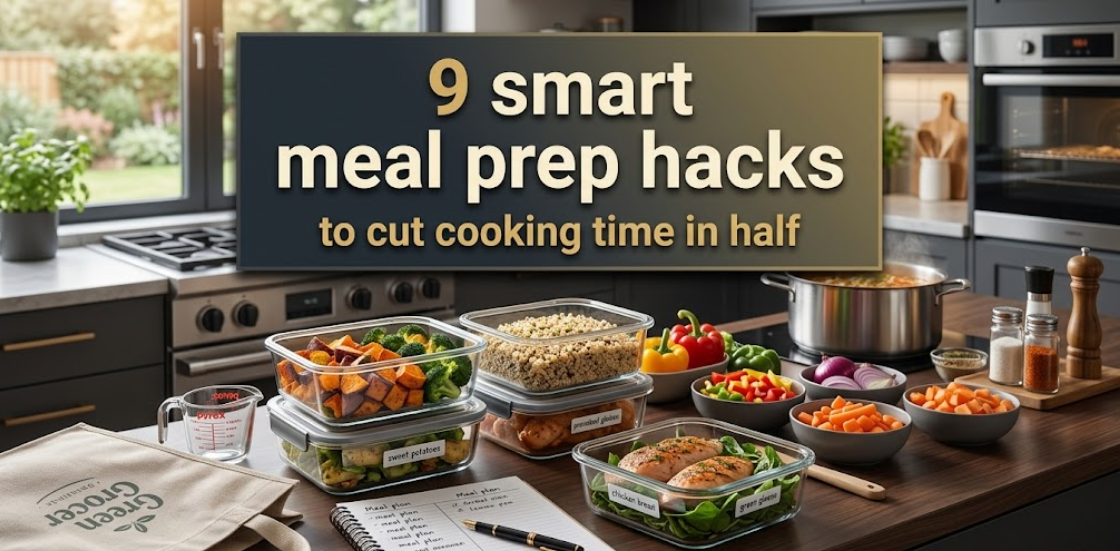
There’s a quiet frustration that builds when cooking starts to feel like a daily obstacle instead of something supportive. You come home tired, glance at the kitchen, and realize that making a proper meal will take far longer than you have energy for. That’s where smart meal prep comes in—not as a rigid system, but as a collection of small, practical decisions that dramatically reduce the time you spend cooking every day.
This isn’t about spending your entire Sunday in the kitchen. It’s about working smarter so that your effort stretches further. The following nine hacks are designed for real-life routines, where time is limited and consistency matters more than perfection.
hack 1: batch your “slowest step” first
Every meal has one step that takes the longest—boiling rice, baking potatoes, simmering lentils. Instead of letting that step slow you down every day, batch it once and reuse it.
For example, cooking rice daily might take 20 minutes each time. Cooking a large batch once takes almost the same effort but covers multiple meals.
time comparison:
| Task | Daily Cooking (5 days) | Batch Cooking Once | Time Saved |
|---|---|---|---|
| Cooking rice | 100 minutes | 25 minutes | 75 minutes |
| Boiling potatoes | 80 minutes | 20 minutes | 60 minutes |
Once your slowest component is ready, the rest of your meals come together much faster.
hack 2: pre-chop vegetables in bulk
Chopping vegetables every day adds up more than most people realize. It’s not difficult, but it’s repetitive and time-consuming.
Instead, dedicate 20–30 minutes to washing and chopping vegetables for several days.
vegetable prep chart:
| Vegetable | Prep Time (Bulk) | Storage Life | Best Use Cases |
|---|---|---|---|
| Carrots | 10 min | 5 days | Stir-fries, snacks |
| Bell peppers | 10 min | 4 days | Wraps, sautés |
| Broccoli | 8 min | 3–4 days | Roasting, steaming |
daily time saved:
| Activity | Without Prep | With Prep | Time Saved |
|---|---|---|---|
| Vegetable chopping | 15 min/day | 0–2 min | ~65 min/week |
The key is storing them properly in airtight containers so they stay fresh.
hack 3: use multi-purpose ingredients
Instead of cooking separate dishes from scratch, prepare ingredients that can serve multiple meals.
Example:
- roasted chicken → wraps, salads, rice bowls
- cooked beans → soups, salads, side dishes
multi-use efficiency table:
| Ingredient | Initial Prep Time | Number of Uses | Total Time Saved |
|---|---|---|---|
| Grilled chicken | 25 min | 3–4 meals | 60–80 min |
| Cooked lentils | 30 min | 3 meals | 45 min |
This approach reduces both cooking and decision-making time.
hack 4: cook in parallel, not in sequence
A common mistake is cooking one thing at a time. Instead, overlap tasks.
For example:
- while rice cooks, roast vegetables
- while vegetables roast, cook protein
parallel cooking timeline:
| Time Block | Task A | Task B | Task C |
|---|---|---|---|
| 0–10 min | Prep ingredients | Preheat oven | Start rice |
| 10–30 min | Roast vegetables | Cook protein | Monitor rice |
| 30–45 min | Finish protein | Prepare sauces | Cool ingredients |
This can cut total cooking time nearly in half.
hack 5: rely on one-pot and one-pan meals
The fewer dishes you use, the less time you spend both cooking and cleaning.
Examples:
- one-pot rice meals
- sheet pan chicken and vegetables
- simple stews
efficiency comparison:
| Cooking Style | Cook Time | Cleanup Time | Total Time |
|---|---|---|---|
| Multi-dish meal | 60 min | 20 min | 80 min |
| One-pot meal | 40 min | 10 min | 50 min |
It’s not just about speed—it’s also about reducing effort.
hack 6: prep sauces and seasonings ahead
A meal without flavor feels repetitive quickly. But making sauces daily adds extra steps.
Instead, prepare a few sauces in advance.
sauce prep guide:
| Sauce Type | Prep Time | Storage Life | Best With |
|---|---|---|---|
| Yogurt sauce | 5 min | 4 days | Rice bowls, wraps |
| Tomato base | 30 min | 5 days | Pasta, stews |
| Simple dressing | 5 min | 1 week | Salads |
daily impact:
| Task | Without Prep | With Prep | Time Saved |
|---|---|---|---|
| Sauce making | 10 min/day | 0–2 min | ~50 min/week |
Flavor variety without extra daily work keeps meals enjoyable.
hack 7: portion meals immediately after cooking
After cooking, it’s tempting to leave food in large containers. But portioning meals right away saves time later.
portioning benefits:
| Action | Time Saved Later | Benefit |
|---|---|---|
| Pre-portion meals | 10–15 min/day | Faster reheating |
| Label containers | Avoid confusion | Better organization |
Instead of scooping food each day, you simply grab and heat.
hack 8: create a “fast assembly” meal system
Not every meal needs to be fully cooked in advance. Some can be assembled in minutes if ingredients are ready.
assembly meal examples:
- wraps with pre-cooked filling
- quick salads with protein
- rice bowls
assembly time comparison:
| Meal Type | From Scratch | Prepped Ingredients | Time Saved |
|---|---|---|---|
| Chicken wrap | 30 min | 5–10 min | 20+ min |
| Salad with protein | 20 min | 5 min | 15 min |
This hack works especially well for lunches.
hack 9: keep a backup meal system
Even with the best planning, some days don’t go as expected. Having backup meals prevents you from losing time and energy.
backup options:
- frozen meals
- pre-cooked leftovers
- simple instant foods
backup system table:
| Backup Type | Prep Needed | Use Case |
|---|---|---|
| Frozen curry | None | No-cook dinner |
| Boiled eggs | Minimal | Quick snack or meal |
| Bread + spreads | None | Emergency option |
This ensures you never fall back into time-consuming last-minute cooking.
weekly time-saving overview
Let’s combine all these hacks to see the bigger picture:
| Activity | Without Hacks | With Hacks | Time Saved |
|---|---|---|---|
| Daily cooking | 60 min/day | 25 min/day | 245 min |
| Prep work | 90 min/week | 60 min | 30 min |
| Cleanup | 25 min/day | 15 min/day | 70 min |
total weekly time saved: approximately 5–6 hours
That’s time you can spend on rest, work, or anything else that matters.
sample weekly workflow using these hacks
| Step | Action | Time Required |
|---|---|---|
| Planning | Choose simple meals | 20 min |
| Shopping | Buy ingredients in one trip | 60 min |
| Batch prep | Cook and prep components | 2–3 hours |
| Daily meals | Assemble and reheat | 15–25 min/day |
The key is consistency, not perfection.
practical tips for making it work
- keep recipes simple
- repeat meals you enjoy
- avoid over-prepping
- adjust portions as needed
Meal prep should feel like a support system, not a burden.
common mistakes to watch out for
| Mistake | Better Alternative |
|---|---|
| Cooking too many dishes | Focus on 2–3 main meals |
| Ignoring storage | Use airtight containers |
| Skipping planning | Spend 15–20 minutes planning |
| Overcomplicating meals | Stick to basics |
faqs
- can meal prep really cut cooking time in half?
Yes, especially when you batch ingredients, cook in parallel, and reduce daily prep work. Many people reduce daily cooking time by 40–60%. - how long do prepped ingredients last?
Most cooked foods last 3–5 days in the fridge. Some items can be frozen for longer storage. - what’s the easiest hack for beginners?
Pre-chopping vegetables and cooking a large batch of grains is one of the simplest and most effective starting points. - do i need special equipment?
No. Basic kitchen tools like a knife, pan, and containers are enough to get started. - how do i avoid wasting food?
Plan portions carefully, store food properly, and use versatile ingredients that can fit into multiple meals. - is meal prep suitable for small kitchens?
Yes. Focus on simple recipes, fewer ingredients, and efficient storage to make the most of limited space.
Meal prep doesn’t require major changes—just smarter decisions. These nine hacks are designed to reduce effort without sacrificing quality. Once they become part of your routine, cooking stops feeling like a daily chore and starts becoming something that fits naturally into your life.