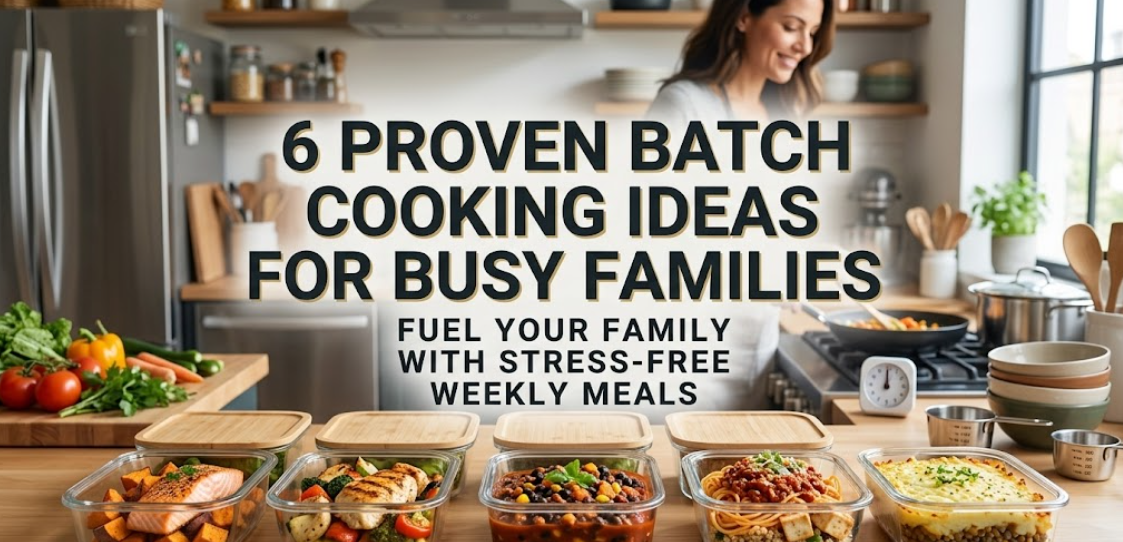
There’s a particular kind of chaos that settles into a household around dinnertime. Someone is hungry earlier than expected, another person doesn’t want what’s being cooked, and time—always—feels short. For busy families, cooking daily from scratch isn’t just inconvenient; it can become a constant source of stress.
Batch cooking offers a practical alternative. Instead of starting from zero every evening, you cook once and stretch that effort across multiple meals. But to make it work for a family—not just an individual—you need meals that are flexible, scalable, and realistic.
The six ideas below are built around those principles. They’re not fancy, and that’s exactly the point. They’re dependable, adaptable, and designed to save time without creating extra work.
idea 1: the big pot family curry system
A large pot of curry—whether vegetable, chicken, or lentil-based—is one of the most efficient meals you can batch cook. It scales easily, stores well, and can be served in different ways throughout the week.
basic approach:
- cook a large pot (6–8 servings or more)
- store in portions
- pair with different sides each day
serving variations:
| Day | Meal Variation |
|---|---|
| Monday | Curry with rice |
| Tuesday | Curry with flatbread |
| Wednesday | Curry over boiled potatoes |
| Thursday | Thick curry as wrap filling |
prep and storage overview:
| Element | Time Needed | Storage Life | Notes |
|---|---|---|---|
| Curry base | 45–60 min | 4–5 days | Flavor improves over time |
| Freezer option | — | 2–3 months | Freeze in portions |
This system works because it reduces cooking to a single main effort while still allowing variety.
idea 2: sheet pan meals for hands-off cooking
Sheet pan meals are a quiet lifesaver. Everything cooks together in one tray, which means less active cooking time and minimal cleanup.
basic formula:
- protein (chicken, fish, tofu)
- vegetables (potatoes, carrots, broccoli)
- oil and seasoning
example batch:
| Ingredient | Quantity (Family Size) |
|---|---|
| Chicken pieces | 1–1.5 kg |
| Mixed vegetables | 1 large tray |
| Oil + spices | As needed |
cook time: 35–45 minutes in the oven
reuse ideas:
| Meal Type | How to Use Leftovers |
|---|---|
| Wraps | Slice chicken and veggies |
| Rice bowls | Serve over pre-cooked rice |
| Quick salads | Add greens and dressing |
efficiency comparison:
| Cooking Method | Active Time | Cleanup Time |
|---|---|---|
| Traditional | 60 min | 20 min |
| Sheet pan | 15–20 min | 10 min |
This approach is ideal for families because it allows you to cook large quantities without constant attention.
idea 3: batch-cooked pasta bases
Pasta is already family-friendly, but it becomes even more useful when you batch the sauce instead of the entire dish.
how it works:
- cook a large pot of sauce
- store separately from pasta
- cook fresh pasta as needed (or batch cook lightly)
sauce options:
- tomato-based
- meat sauce
- vegetable sauce
batch planning table:
| Sauce Type | Prep Time | Portions | Storage Life |
|---|---|---|---|
| Tomato sauce | 30 min | 6–8 | 5 days |
| Meat sauce | 45 min | 6 | 4 days |
daily meal variations:
| Day | Pasta Style |
|---|---|
| Monday | Classic pasta with sauce |
| Tuesday | Baked pasta with cheese |
| Wednesday | Pasta with added vegetables |
By separating sauce and pasta, you avoid soggy leftovers and keep meals fresh.
idea 4: the “cook once, eat twice” protein strategy
Proteins often take the most effort to prepare, so cooking them in bulk can significantly reduce daily workload.
example proteins:
- roasted chicken
- grilled beef
- baked fish
usage chart:
| Protein | First Meal | Second Meal | Third Meal |
|---|---|---|---|
| Roast chicken | Dinner with sides | Sandwich filling | Soup or salad topping |
| Ground beef | Spaghetti | Tacos | Rice bowl |
time efficiency:
| Task | Without Batch | With Batch | Time Saved |
|---|---|---|---|
| Protein cooking | 30 min/day | 60 min once | ~90 min/week |
This method ensures you’re not repeating the same cooking effort every day.
idea 5: freezer-friendly family meals
Freezer meals act as a safety net for the busiest days. When there’s no time or energy to cook, they step in instantly.
ideal freezer meals:
- casseroles
- soups
- stews
- stuffed vegetables
freezer planning table:
| Meal Type | Prep Time | Freezer Life | Reheat Method |
|---|---|---|---|
| Casserole | 60 min | 2–3 months | Oven |
| Soup | 40 min | 2 months | Stovetop/microwave |
| Stew | 60 min | 3 months | Stovetop |
family benefit:
- reduces reliance on takeout
- ensures a home-cooked option is always available
This is especially helpful during unpredictable weeks.
idea 6: breakfast batch prep for smoother mornings
Busy families often struggle most in the morning. Preparing breakfast in advance can remove that stress entirely.
simple batch options:
- egg muffins
- pancakes (pre-cooked and frozen)
- overnight oats
breakfast prep chart:
| Item | Prep Time | Storage Life | Reheat Time |
|---|---|---|---|
| Egg muffins | 25 min | 4 days | 30–60 sec |
| Pancakes | 30 min | 1 month | 1–2 min |
| Overnight oats | 5 min | 3 days | None |
morning time saved:
| Task | Without Prep | With Prep | Time Saved |
|---|---|---|---|
| Breakfast prep | 20 min/day | 5 min | 75 min/week |
This small change can make mornings feel far less rushed.
weekly batch cooking schedule example
| Day | Task | Time Needed |
|---|---|---|
| Saturday | Plan meals | 20 min |
| Sunday | Grocery shopping | 60 min |
| Sunday | Batch cooking session | 2–3 hours |
| Mid-week | Light prep (optional) | 30 min |
total weekly investment: about 4–5 hours
family portion planning guide
| Family Size | Portions per Meal | Weekly Prep Target |
|---|---|---|
| 2–3 people | 3–4 servings | 10–12 meals |
| 4–5 people | 5–6 servings | 15–18 meals |
planning portions correctly helps avoid both shortages and waste.
practical tips for busy families
- involve family members in simple tasks
- repeat meals that everyone enjoys
- keep backup freezer meals ready
- avoid overcomplicating recipes
batch cooking should reduce stress, not add to it.
common challenges and solutions
| Challenge | Solution |
|---|---|
| Kids dislike meals | Offer simple variations |
| Limited time | Focus on 2–3 core dishes |
| Food boredom | Change sides and sauces |
| Storage issues | Use stackable containers |
faqs
- how many meals should i batch cook each week?
For most families, preparing 2–3 main dishes that yield multiple portions is enough to cover several days. - can batch cooking work for picky eaters?
Yes. Choose simple base meals and allow small variations like different sauces or sides. - how long can batch-cooked meals be stored?
Most meals last 3–5 days in the fridge and up to 2–3 months in the freezer. - do i need a large kitchen for batch cooking?
No. You can work with limited space by focusing on fewer dishes and organizing storage efficiently. - is batch cooking cost-effective for families?
Yes. It reduces food waste and limits the need for takeout or last-minute purchases. - what’s the best way to get started?
Start with one or two recipes, cook larger portions, and gradually build your routine.
Batch cooking for a family isn’t about cooking more—it’s about cooking smarter. These six ideas are designed to fit into real schedules, real kitchens, and real routines. Once they become part of your weekly rhythm, the daily pressure of “what’s for dinner?” starts to fade, replaced by something far more manageable: a plan that works.