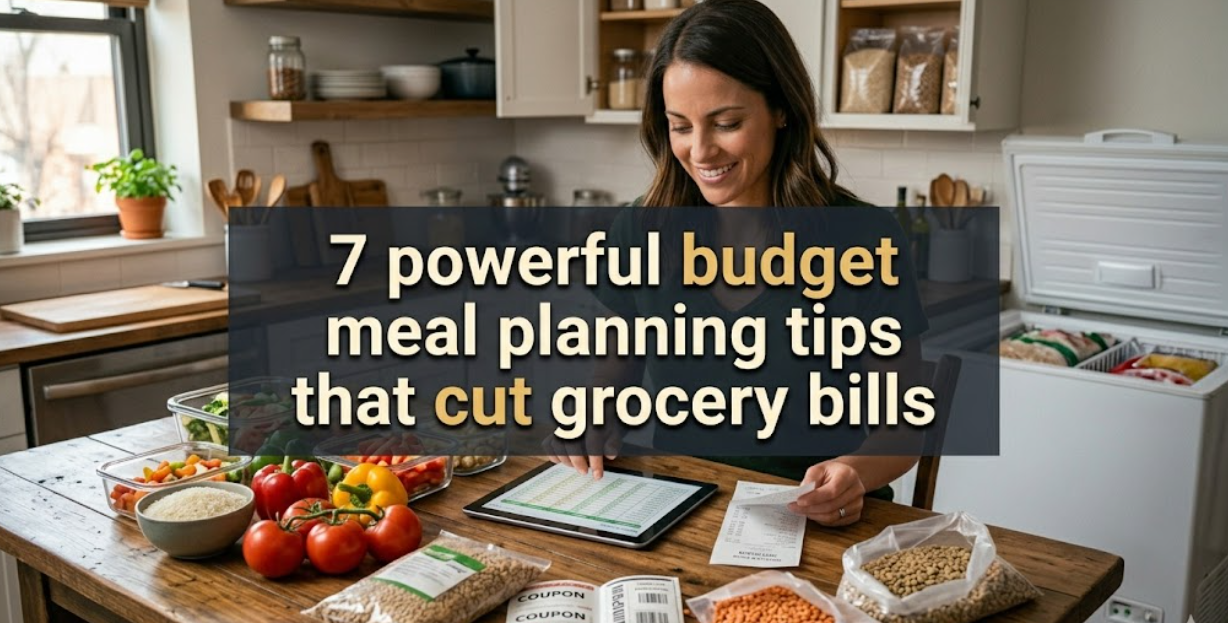
There’s a quiet moment most people experience at least once a week: standing in the kitchen, opening the fridge, and wondering how so much money turned into so little food. Budget meal planning isn’t about strict dieting or eliminating enjoyment—it’s about reclaiming control. When done right, it reshapes not only your grocery bill but also your time, stress levels, and even your relationship with food.
This guide walks through seven practical, field-tested strategies that genuinely lower grocery costs. No gimmicks, no extreme couponing marathons—just habits that compound over time.
understanding where your money actually goes
Before changing anything, it helps to understand your current habits. Many people underestimate how much they spend on groceries and overestimate how efficiently they use them.
A simple breakdown often reveals the truth:
| Category | Average Weekly Spend | Waste Level | Notes |
|---|---|---|---|
| Fresh produce | $20–$40 | High | Often spoils before use |
| Snacks & convenience | $15–$30 | Medium | Impulse purchases |
| Meat & protein | $25–$60 | Low | Expensive but usually consumed |
| Pantry items | $10–$25 | Low | Long shelf life |
| Takeout (hidden cost) | $20–$80 | N/A | Often replaces planned meals |
Even without changing what you eat, simply reducing waste can cut 15–30% from your bill.
tip 1: plan meals around what you already have
The most overlooked strategy is also the simplest: start with your kitchen, not the store.
Instead of asking “What should I buy?” ask “What can I make with what’s already here?”
Open your fridge, freezer, and pantry. You’ll usually find:
- Half-used vegetables
- Frozen leftovers
- Rice, pasta, or lentils
- Sauces and spices
These are not scraps—they are the foundation of several meals.
Example:
| Existing Ingredients | Possible Meal Idea |
|---|---|
| Rice + frozen veggies | Vegetable fried rice |
| Lentils + spices | Simple dal with flatbread |
| Pasta + canned tomatoes | Basic marinara pasta |
| Chicken + leftover veg | Stir-fry or wraps |
This approach alone can eliminate 1–2 unnecessary grocery trips per week.
tip 2: build a “core meal rotation”
Decision fatigue is expensive. The more you improvise, the more likely you are to overspend or order takeout.
A core rotation means having 8–12 meals you repeat regularly. Not daily—but often enough to simplify planning.
Example weekly rotation:
| Day | Meal Type | Example Dish |
|---|---|---|
| Monday | Low-effort | Lentil soup |
| Tuesday | Protein-heavy | Chicken & rice |
| Wednesday | Quick | Egg fried rice |
| Thursday | Vegetarian | Chickpea curry |
| Friday | Flexible | Leftovers |
| Saturday | Comfort meal | Pasta night |
| Sunday | Batch cooking | Stew or casserole |
The goal is not boredom—it’s predictability. Once you know your meals, your shopping list becomes smaller and more precise.
tip 3: shop with a strict, structured list
Walking into a grocery store without a list is like shopping with your eyes instead of your brain.
But not all lists are equal. A strong list is:
- Organized by category
- Based on meals, not random items
- Limited in size
Compare these two approaches:
Unstructured list:
- Milk
- Bread
- Chicken
- Snacks
- Vegetables
Structured list:
| Category | Items Needed | Meal Linked To |
|---|---|---|
| Grains | Rice (1 kg) | Chicken & rice |
| Protein | Chicken (500g) | Stir-fry |
| Vegetables | Carrots, onions | Soup & curry |
| Dairy | Milk | Breakfast |
| Pantry | Canned tomatoes | Pasta |
This shift prevents overbuying and ensures everything you purchase has a purpose.
tip 4: embrace batch cooking (without burnout)
Batch cooking doesn’t mean eating the same meal for seven days. It means preparing components that can be reused in different ways.
Instead of cooking full meals, cook building blocks:
| Component | Quantity | Uses Across Week |
|---|---|---|
| Cooked rice | 4–6 cups | Stir-fry, bowls, side dishes |
| Roasted chicken | 1 whole | Wraps, salads, soups |
| Boiled lentils | 3 cups | Curry, soup, side |
| Chopped veggies | Large box | Quick cooking, snacks |
From these, you can assemble different meals:
- Chicken rice bowl
- Chicken salad
- Lentil soup
- Veggie stir-fry
This flexibility reduces both food waste and boredom.
tip 5: prioritize low-cost, high-satiety foods
Some foods are simply more cost-efficient. They fill you up, last longer, and stretch across meals.
Top budget-friendly staples:
| Food Item | Cost Efficiency | Shelf Life | Meal Versatility |
|---|---|---|---|
| Rice | Very high | Long | Extremely high |
| Lentils | Very high | Long | High |
| Eggs | High | Medium | Very high |
| Potatoes | High | Medium | High |
| Oats | Very high | Long | Medium |
Compare cost per meal:
| Meal Type | Avg Cost Per Serving |
|---|---|
| Lentil curry + rice | $0.80–$1.20 |
| Egg fried rice | $1.00–$1.50 |
| Chicken stir-fry | $2.00–$3.00 |
| Takeout meal | $5.00–$12.00 |
The difference adds up quickly over a month.
tip 6: reduce food waste strategically
Throwing away food is like throwing away money—literally.
Most waste happens in three categories:
- Forgotten produce
- Leftovers that go uneaten
- Expired dairy or bread
Simple fixes:
- Use the “first in, first out” method
Place older items at the front of your fridge. - Create a leftover day
One day per week dedicated to finishing food. - Freeze smartly
| Food Type | Freezing Tip |
|---|---|
| Bread | Freeze slices, not whole loaf |
| Cooked meals | Portion before freezing |
| Vegetables | Chop before freezing |
| Meat | Freeze in meal-sized portions |
- Plan “rescue meals”
Meals designed to use random leftovers, like soups or stir-fries.
tip 7: shop less frequently (but smarter)
Frequent shopping leads to impulse spending. Each visit increases the chance of buying things you don’t need.
Try reducing trips:
| Shopping Frequency | Average Weekly Spend Impact |
|---|---|
| 3–4 times/week | Higher (+20–30%) |
| 2 times/week | Moderate |
| 1 time/week | Lower (-10–20%) |
Why it works:
- Fewer temptations
- Better planning
- More intentional purchases
But this only works if paired with a solid meal plan.
a sample weekly budget meal plan
Here’s how all these tips come together in practice:
| Day | Meal | Estimated Cost |
|---|---|---|
| Monday | Lentil curry + rice | $1.00 |
| Tuesday | Chicken stir-fry | $2.50 |
| Wednesday | Egg fried rice | $1.20 |
| Thursday | Chickpea salad | $1.50 |
| Friday | Leftovers | $0.50 |
| Saturday | Pasta with sauce | $1.80 |
| Sunday | Vegetable soup | $1.30 |
Estimated weekly food cost per person: $9–$15
Compare that to typical unplanned spending, and the difference is substantial.
hidden habits that quietly increase grocery bills
Even with good intentions, certain habits sabotage budgets:
- Shopping while hungry
- Buying in bulk without a plan
- Falling for “discount traps”
- Overestimating cooking time
A quick self-check:
| Habit | Impact Level | Fix |
|---|---|---|
| Impulse snack buying | High | Set a snack budget |
| Ignoring leftovers | High | Schedule leftover meals |
| Overbuying produce | Medium | Buy smaller quantities |
| Trying new recipes daily | Medium | Stick to rotation |
Awareness alone can cut unnecessary spending significantly.
a simple budgeting framework for groceries
To keep things consistent, use a percentage-based system:
| Income Level | Suggested Grocery Budget |
|---|---|
| Low income | 10–15% |
| متوسط (mid) | 8–12% |
| High income | 5–8% |
Then break it down weekly.
Example:
Monthly budget: $200
Weekly budget: ~$50
Track it casually—not obsessively. The goal is awareness, not perfection.
why these tips work together
Each tip reinforces the others:
- Planning reduces waste
- Batch cooking supports planning
- Smart shopping supports budgeting
- Meal rotation reduces decision fatigue
Individually helpful, but together they create a system.
frequently asked questions
- how much can I realistically save with meal planning?
Most people save between 20% and 40% on groceries within the first month. The biggest savings come from reducing waste and cutting impulse purchases. - what if I get bored eating the same meals?
You don’t need to repeat meals daily. Rotate ingredients instead. For example, chicken can become stir-fry, wraps, or soup across the week. - is buying in bulk always cheaper?
Not always. Bulk is only cheaper if you actually use everything. Otherwise, it leads to waste—which cancels out any savings. - how do I start if I’ve never meal planned before?
Start small. Plan just 3–4 meals for the week instead of all 7 days. Build from there once it feels natural. - can meal planning work for families?
Yes, and the savings are even greater. The key is choosing meals that scale easily, like rice dishes, pasta, and stews. - what’s the biggest mistake beginners make?
Trying to be too perfect. Overcomplicated plans often fail. Simple, repeatable meals work better long-term.
Budget meal planning isn’t about restriction—it’s about clarity. Once you know what you’re eating, why you’re buying it, and how it fits into your week, your grocery bill naturally shrinks.
And the best part? The system gets easier over time.